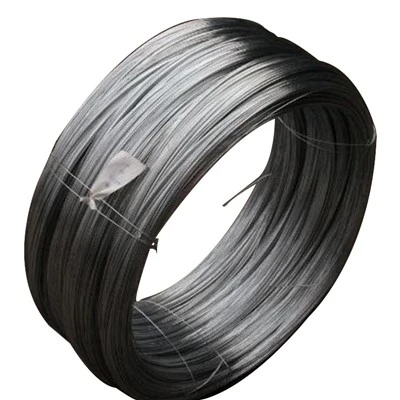
Carbon steel wire is a versatile and essential material in the field of model making. As a carbon steel wire supplier, I've witnessed firsthand the wide range of applications this material offers to model makers. In this blog post, I'll explore the various uses of carbon steel wire in model making, highlighting its unique properties and benefits.
Structural Support
One of the primary uses of carbon steel wire in model making is for providing structural support. Its high tensile strength and durability make it an ideal choice for creating frameworks and skeletons for models. Whether it's a large - scale architectural model or a small - scale mechanical model, carbon steel wire can be bent and shaped to form the basic structure.
For example, in architectural models, carbon steel wire can be used to create the internal framework of buildings. The wire can be cut to the appropriate lengths and joined together using techniques such as soldering or welding. This framework provides stability and support for the exterior materials, such as cardboard, foam, or plastic, that are used to represent the building's facade.
In mechanical models, carbon steel wire can serve as the axles, rods, and supports for moving parts. The wire's strength allows it to withstand the forces exerted during the operation of the model, ensuring smooth and reliable movement. For instance, in a model car, the wire can be used as the drive shafts and suspension components, enabling the wheels to rotate and the car to move realistically.
Detail and Ornamentation
Carbon steel wire can also be used to add fine details and ornamentation to models. Its malleability allows it to be easily shaped into intricate designs, making it perfect for creating decorative elements.
In historical or fantasy models, carbon steel wire can be used to create fences, railings, and other architectural details. The wire can be twisted, coiled, and bent to mimic the look of wrought ironwork, adding a touch of authenticity and elegance to the model. For example, in a model of a medieval castle, the wire can be used to create the spiked gates and the decorative latticework on the towers.
In addition, carbon steel wire can be used to create hair, fur, or other organic details in figurine models. By carefully cutting and shaping the wire, model makers can achieve a realistic and textured appearance. The wire can be painted or treated to match the color and texture of the intended material, enhancing the overall realism of the model.
Electrical Conductivity
Some types of carbon steel wire, such as Q195 Carbon Steel Wire, have good electrical conductivity. This property makes them suitable for use in models that require electrical components, such as electronic models or models with lighting effects.
In electronic models, carbon steel wire can be used as the wiring to connect different components, such as resistors, capacitors, and microcontrollers. The wire's conductivity allows for the efficient flow of electricity, ensuring the proper functioning of the model. For example, in a model of a circuit board, the wire can be used to create the electrical connections between the various components, enabling the board to perform its intended functions.
In models with lighting effects, carbon steel wire can be used to carry the electrical current to the light sources, such as LEDs. The wire can be hidden within the structure of the model, providing a clean and professional appearance. For instance, in a model of a cityscape at night, the wire can be used to connect the LEDs that represent streetlights and building lights, creating a realistic and visually appealing effect.
Spring - like Properties
Carbon steel wire can exhibit spring - like properties, which are useful in model making. Springs are often used in models to provide tension, compression, or rebound forces.
In mechanical models, carbon steel wire can be coiled to create springs. These springs can be used in a variety of applications, such as in the suspension systems of vehicles or the mechanisms of toys. The spring's ability to store and release energy allows for smooth and realistic movement in the model. For example, in a model of a pogo stick, the carbon steel wire spring can provide the necessary bounce, enabling the pogo stick to jump up and down.
In addition, the spring - like properties of carbon steel wire can be used to create flexible joints and connections in models. The wire can be bent and shaped to form a flexible hinge, allowing parts of the model to move relative to each other. This is particularly useful in models of articulated figures or robots, where the ability to move joints realistically is essential.


Different Types of Carbon Steel Wire for Model Making
There are several types of carbon steel wire available, each with its own unique properties and characteristics. As a supplier, I offer a range of carbon steel wires suitable for model making, including Q195 Carbon Steel Wire, Q275 Carbon Steel Wire, and 1010 Carbon Steel Wire.
Q195 Carbon Steel Wire is a low - carbon steel wire with good ductility and weldability. It is relatively soft and easy to work with, making it suitable for applications where the wire needs to be bent and shaped without breaking. This type of wire is often used for creating delicate details and decorative elements in models.
Q275 Carbon Steel Wire is a medium - carbon steel wire with higher strength and hardness compared to Q195. It is more suitable for applications where the wire needs to withstand greater forces, such as in structural support and mechanical components.
1010 Carbon Steel Wire is a low - carbon steel wire with excellent formability and surface finish. It is commonly used in a wide range of model - making applications, from structural support to decorative details.
Conclusion
Carbon steel wire is a valuable material in model making, offering a wide range of uses and benefits. Its strength, malleability, electrical conductivity, and spring - like properties make it suitable for various applications, from providing structural support to adding fine details and creating functional components.
As a carbon steel wire supplier, I am committed to providing high - quality products that meet the needs of model makers. Whether you are a professional model maker or a hobbyist, I can offer you the right type of carbon steel wire for your project. If you are interested in purchasing carbon steel wire for your model - making needs, I encourage you to contact me for more information and to discuss your specific requirements. We can work together to find the best solution for your project and ensure its success.
References
- "Metals Handbook: Properties and Selection: Irons, Steels, and High - Performance Alloys." ASM International.
- "Model Making Techniques: A Comprehensive Guide." Various authors.