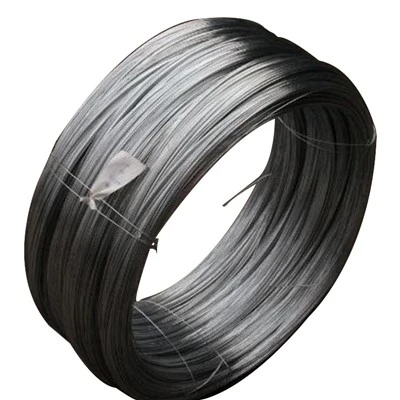
Hey there, if you’re buying or using carbon steel wire, you know that getting the diameter right is non-negotiable—too thin and it’ll snap under pressure, too thick and it’ll waste material, add unnecessary cost, and throw off whatever project you’re working on. I’ve been in the carbon steel wire supplier game for over a decade, and I’ve seen so even seasoned guys mess this up because they don’t nail the measurement part. Today, I’m breaking down exactly how to measure carbon steel wire diameter like a pro—no fancy lab degree required.
First off, why does this matter so much? Carbon steel wire comes in a ton of grades for different jobs—we’ve got everything from soft, ductile stuff for fencing or welding rod to heavy-duty, high-tensile wire for construction or automotive parts. Each grade has strict specs, and diameter is one of the first things that determine if it meets those specs. For example, if you’re using 1010 carbon steel wire for cold heading (think making screws or bolts), the diameter has to be spot-on or the die’ll wear out fast, and you’ll get scrap parts. Or if you’re going for higher-strength stuff like 45# carbon steel wire for structural fasteners, even a tiny deviation can lead to part failure down the line. If you’re shopping for specific grades, you can check out our popular picks like 1020 carbon steel wire, Q195 carbon steel wire, Q275 carbon steel wire, 45# carbon steel wire, or 1010 carbon steel wire for more on their specs, but today we’re talking tools and steps to measure that diameter accurately.
Let’s start with the most basic, go-to tool: a digital caliper. This is probably what I grab 90% of the time, no matter the wire size. If you don’t know what a digital caliper is, it’s that handy tool with two sets of jaws—one for outside measurements, one for inside, and a digital readout that gives you numbers to the thousandth of an inch or hundredth of a millimeter. Super precise, way better than an old-fashioned ruler or tape. But here’s the trick: you can’t just clamp the jaws down hard and take a reading. Carbon steel wire is rigid, but if you squeeze too tight, you’ll actually flatten the wire a tiny bit, which makes your measurement wrong. Aim for just enough pressure that the caliper slides smoothly over the wire with no wiggle—like holding a sheet of paper between your fingers. Also, take multiple readings. Don’t just measure one spot on the wire. Stretch a few feet of it out, and take 5-6 readings at different points along the length. Carbon steel wire is drawn through dies during manufacturing, so sometimes you might get slight variations—like a tiny bump or a thin spot from wear on a die. If you only measure once, you could miss that variation. And rotate the wire as you take readings too. The wire isn’t perfectly round, right? It’s easy to measure along one axis and not the other. Spin it 90 degrees and measure again—those two readings should be almost identical; if they’re off by more than a few thousandths, that’s a problem. I tell all our customers to do this every time because it catches inconsistencies that a single measurement would miss.
Next up, if you’re working with really thin wire, like 20 gauge or smaller (common for things like craft wire or small welding electrodes), a digital caliper might be overkill or even hard to use because the jaws are too big. That’s where a wire gauge (also called a wire sizing tool or American Wire Gauge, AWG, tool) comes in. Wire gauges are flat metal plates with a bunch of slots, each labeled with a gauge number. The idea is simple: you find the slot that the wire slides into without being too loose or too tight, and that number is its gauge, which you can convert to diameter with a standard AWG chart. Wait, but hold on—AWG is mostly for electrical wire, right? For carbon steel wire, especially heavy stuff, people often use a different system: either Imperial (inches) or metric (millimeters). But a lot of our wire gauges have both AWG and metric/Imperial markings, so that works. The key here is using the right slot. Don’t force the wire into a slot—it should fit snugly. If it slides through easily, go to the next smaller slot (since smaller gauge numbers mean thicker wire). If it’s too tight, go to the next larger slot. Again, test multiple spots—thin wire is way more likely to have diameter variation than thicker wire. I’ve had customers tell me their “18 gauge” wire was too flimsy, and we found it was actually a tiny bit smaller than it should be because they forced it into a slot that was too big.
What about if you don’t have a caliper or a wire gauge? Maybe you’re on a job site and forgot your tools, or you’re working with extra thick wire, like ½ inch or more for cable stays or fencing. Then a micrometer (specifically an outside micrometer) is your next best bet. Micrometers are even more precise than calipers—they can measure down to ten-thousandths of an inch. They work by turning a thimble that moves a spindle, and you read the measurement off the main scale and the thimble scale. Same rule as calipers: don’t tighten it too much, or you’ll deform the wire. Most micrometers have a little ratchet on the end that clicks when you have the right pressure—use that, it’s there for a reason. For really thick wire, you can also use a tape measure, but that’s only for rough estimates. Wait, no—if you use a tape, wrap it around the wire to get the circumference, then do the math to find diameter. Because diameter = circumference divided by pi (3.14159…). But this is a last resort, not a primary method, because wrapping the tape unevenly or stretching it will throw off your number. I only use this if I don’t have anything else, and even then I cross-check with another method if possible.
Now, a few common mistakes I see all the time, and they’re so easy to fix. First, not accounting for the wire’s surface condition. Carbon steel wire can have a coating—like zinc for galvanized wire, or oil for drawing lubrication. That coating adds a tiny bit to the diameter. If you need the actual base steel diameter (not the coated one), you’ll need to remove a small section of the coating before measuring. For example, if the wire is galvanized, sand a ¼ inch spot of the end lightly with sandpaper until you see bare steel, then measure that spot. If you don’t, your reading will be a few thousandths larger than the actual wire diameter, which might be a problem if you’re fitting it into a hole or using it with other parts.


Second, temperature matters. Wait, carbon steel expands when it’s warm, contracts when it’s cold. If you’re measuring wire that’s been sitting in the sun all day, or left outside in freezing temps, that can change the diameter a little—usually not a huge amount, but if you’re working with super tight tolerances (like for aerospace or high-precision parts), it’s something to keep in mind. Try to measure at room temperature (around 20°C or 68°F) for consistency.
Third, ignoring tolerance specs. No manufacturing process is perfect, so carbon steel wire has a specified tolerance—meaning the diameter can vary within a certain range and still be considered good. For example, a common tolerance for medium-grade carbon steel wire is ±0.005 inches (0.127 mm), depending on the grade and diameter. Our 1020 carbon steel wire for structural use has a tolerance of ±0.003 inches for most sizes, while our higher-tensile Q275 carbon steel wire has a slightly tighter tolerance because it’s used in more critical applications. So if your measurement is a tiny bit outside the nominal diameter, don’t panic—check the spec sheet for the wire grade you’re using. That’s why buying from a reputable supplier is key; we test every spool before it leaves our warehouse to make sure it meets those tolerance specs, so you don’t have to second-guess it.
Let me walk you through a quick example to make this real. Say you’re using 45# carbon steel wire for making suspension springs for a small farm trailer. The spec says nominal diameter is 0.250 inches, tolerance is ±0.002 inches. So acceptable measurements are between 0.248 and 0.252 inches. Here’s what I’d do: grab my digital caliper, warm it up to room temp (just to be safe), and pick a few spots along a 10-foot length of the wire. I measure the bare steel (since it’s uncoated spring wire) at four different points, rotating the wire each time. Let’s say I get readings of 0.251, 0.249, 0.250, and 0.251 inches. All right in that 0.248-0.252 range, so that spool is good to go. If I got a reading of 0.253 on one spot, I’d measure a few more spots to make sure it’s not a one-off—if most are good and that one’s a fluke, it’s still fine, but if three readings are over 0.252, that’s a problem and I’d swap to a different spool.
Another example: if you’re working with very thin 1010 carbon steel wire for making paper clips or small staples. Nominal gauge is 22 AWG, which is 0.0253 inches diameter. The slots on the wire gauge for 22 AWG—you slide the wire into the slot, it fits snugly, you rotate it a few times, it doesn’t move side to side. You check two more spots on the spool, same slot, so that’s good. If it falls through the slot, it’s too thin, and that would make flimsy paper clips that bend too easy.
At the end of the day, measuring carbon steel wire diameter isn’t rocket science, but it’s a skill that saves you from wasted material, failed parts, and wasted time. The key is using the right tool for the job, taking multiple measurements to account for variations, and remembering to check your wire’s tolerance specs. If you’re shopping for carbon steel wire for your next project, we’ve got all the common grades covered—whether you need ductile 1010 or 1020 for general fabrication, strong Q195 or Q275 for construction, or hard 45# for high-stress parts. We test every batch to make sure they meet all diameter and performance specs, so you can focus on your project, not measuring and worrying about whether your wire is up to par. If you’re looking to stock up for a big job or just have questions about which grade works best for your needs, reach out to our team to chat through what you need—we’re here to help.
References:
- ASTM A510/A510M-21, Standard Specification for General Requirements for Carbon Steel Wire Rods and Wire
- Wire Gauge Standards, American National Standards Institute (ANSI)
- Carbon Steel Wire Manufacturing Tolerances, International Iron and Steel Institute (IISI)
- Digital Caliper and Micrometer Operating Procedures, National Institute of Standards and Technology (NIST)