If you've ever driven past a utility-scale solar farm with rows of glistening panels stretching to the horizon, you might have noticed the white or silver pipework snaking beneath them, or the compact units near the center that convert the sun's power into something your home can use. What most folks don't realize is that hidden in those systems are tiny, critical components made of a super tough, heat-resistant alloy called Inconel. And as someone who's been supplying Inconel coils for over a decade, I've seen firsthand how these coils aren't just "parts" - they're quiet workhorses that keep solar energy systems running when every other material would fail. Let's break down why Inconel coils matter so much in the solar industry, and why picking the right type makes all the difference.
First, let's get one thing straight: solar energy isn't just panels on roofs or fields. It's a whole ecosystem. For utility-scale solar, there are concentrated solar power (CSP) plants that use mirrors to focus sunlight and create extreme heat, then turn that heat into electricity. There's also photovoltaic (PV) systems, which are everywhere from residential rooftops to big farms, but those need balance-of-system (BOS) components like inverters, heat exchangers, and piping to move energy around. All of these parts face brutal conditions: scorching heat, constant exposure to UV rays, and in some cases, moisture or even tiny particles that can wear materials down over time. Regular steel or aluminum might hold up for a few years, but solar farms are built to last 25+ years, and that's where Inconel coils step in.
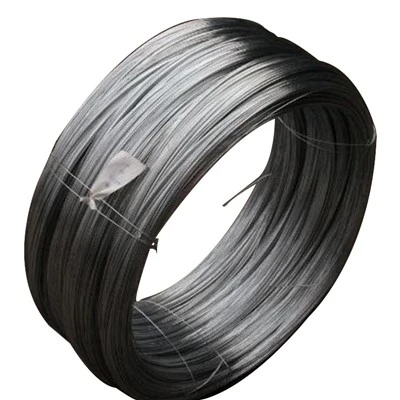
So what's Inconel, anyway? It's a family of nickel-chromium superalloys that were originally developed for jet engines back in the mid-20th century, designed to withstand temperatures way higher than most metals can handle without rusting or cracking. The "coil" part just means it's rolled into a thin, flexible strip that can be shaped, bent, or stamped into all kinds of small, precise parts - perfect for the tight spaces in solar equipment. Unlike solid blocks, coils are easier to transport and form into custom components, which is a huge win for manufacturers who need to cut down on waste and speed up production.
Let's talk about where these coils actually show up in solar systems. Start with CSP plants, which are arguably the most demanding environment for solar materials. In a typical CSP plant, molten salt is used as a heat transfer fluid (HTF) - it gets heated to over 500°C (932°F) by focused sunlight, then flows through pipes to a steam turbine that generates electricity. The pipes holding that molten salt? They're made with Inconel coils because regular alloys would corrode when exposed to hot salt, or warp under constant heat. I've worked with CSP plant engineers who told me that switching from steel to Inconel coils extended the lifespan of their heat exchangers by nearly a decade, cutting down on costly downtime. Now, not all Inconel is the same here - some use Inconel 686 Coil because it's extra resistant to corrosion in high-salt environments, which is perfect for the harsh, sunny deserts where most CSP plants are built.
Then there's PV systems, especially the big utility ones. The inverters that turn DC power from panels into AC power for the grid run hot - really hot. A residential inverter might get up to 60°C (140°F) on a hot day, and utility inverters can get even warmer, since they're handling way more power. They need cooling systems, and those cooling systems use heat exchangers made from Inconel coils. Why? Because even at those "low" temperatures, moisture and dust in the air can cause regular metals to rust, and rusty heat exchangers don't cool well. Inconel doesn't corrode easily, so the heat exchanger works better for longer, which means the inverter doesn't overheat and shut down. I've also seen these coils used in the junction boxes that connect panels together - they're small, but they need to bend without breaking when the panels expand and contract in extreme heat. Inconel 925 Coil is popular here because it has great strength at moderate temperatures, and it's flexible enough to shape into the tight bends those junction boxes need.
Wait, there's also another area I don't hear people talk about enough: solar thermal systems for industrial use. Like, factories that use heat for manufacturing, instead of electricity. Those systems often have pipes that carry heated water or oil, and they're exposed to UV light all day, plus temperature swings from morning to night. Inconel coils hold up way better than copper here because copper can get pitted from constant temperature changes, and pitted pipes leak. My team has supplied Inconel 783 Coil to a few industrial solar thermal projects in the Southwest, and they're already at year 8 with zero leaks - that's unheard of with other materials.
But why not just use a cheaper metal? I get it, cost is a big factor in solar, especially when you're scaling up. But here's the thing: solar is a long game. If you use a cheap coil that fails after 5 years, you're not just replacing parts - you're shutting down a section of a solar farm, which means lost revenue. The downtime alone can cost more than the extra cost of Inconel upfront. I've had a few small solar installation guys reach out, surprised when I told them that an Inconel coil costs a bit more, but they'll never have to replace it. One told me that he used steel for a residential project, and after 3 years, the heat exchanger rusted, and he had to go back and fix it - that cost him more in labor than he would've spent on Inconel in the first place.
Let's get specific about the different types of coils, because not all Inconel is a one-size-fits-all. Inconel 601 Coil is super versatile, works well at both high and low temperatures, so it's used in everything from small residential inverters to big CSP components. Inconel 617 Coil is another one - it's made for extremely high heat, so that's the go-to for CSP plants where the molten salt gets even hotter, like over 650°C. We also work with a lot of solar equipment manufacturers who have custom specs, so we can cut the coils to exact lengths, or even shape them a little before shipping, which saves them time on the factory floor.
I've been in this game long enough to see the solar industry go from a niche thing to a main power source, and one of the biggest lessons I've learned is that the smallest parts are often the most important. The panels get all the press, but without the Inconel coils keeping the systems running, those panels can't do their job. Last year, I visited a CSP plant in Nevada that's been running since 2015 - they still use the same Inconel coils we supplied in the heat exchangers. The plant manager told me that those coils have never needed a single repair, and that's why the plant has been able to hit its production goals every year. That's the kind of reliability the solar industry needs, especially as we move towards more big utility-scale projects.
Now, I know some of you might be thinking: "What about other superalloys? Why Inconel?" Well, there are others, but Inconel hits that sweet spot between performance and cost compared to stuff like Hastelloy, which is even more expensive. And it's way easier to work with than some other high-temp metals - you can weld it, bend it, stamp it without it cracking, which is huge for manufacturers who need to make parts in high volume. Also, Inconel is pretty resistant to things like oxidation, which is when metals get eaten away by oxygen at high temperatures. In places like the desert, where the air is dry and there's not much moisture, oxidation is a big problem, and Inconel handles that way better than any common metal.


But here's the thing: not all Inconel coils are the same. The quality depends on the alloy blend, how they're rolled, and the finishing. I've had a few customers come to me with coils they bought from somewhere else, and they were cheap, but they had tiny defects that caused corrosion within a year. That's why it's important to work with a supplier that knows the solar industry, not just sells metal. We test every coil we send out for strength and corrosion resistance, so our customers don't have to worry about that. We also keep up with the latest solar tech - as CSP plants start using even higher temperatures, we're already working on new Inconel blends that can handle that, so we're ahead of the curve.
So if you're a solar equipment manufacturer, a farm owner, or someone who installs residential systems, the next time you look at a solar panel or a CSP mirror field, remember the Inconel coils hidden inside. They're the reason those systems don't break down in the extreme heat, the reason they last 25 years or more, and the reason solar can keep growing as a reliable, clean energy source. If you're looking for a supplier that knows exactly what you need for solar applications, whether you need Inconel 686 Coil for CSP, Inconel 925 Coil for inverters, or any of the other types, hit us up to chat about your project. We're not just selling coils - we're helping build the future of solar, one reliable part at a time.
References:
- NASA. (n.d.). Inconel Alloys: Properties and Aerospace Applications. Retrieved from aerospace.nasa.gov/materials/inconel
- International Energy Agency (IEA). (2022). Concentrated Solar Power: Technology Roadmap. Retrieved from iea.org/reports/concentrated-solar-power-roadmap
- Solar Energy Industries Association (SEIA). (2023). Balance of System Components: Material Durability and Lifespan. Retrieved from seia.org/bos-materials
- Nickel Institute. (2021). Nickel-Based Alloys in Renewable Energy Applications. Retrieved from nickelinstitute.org/renewables/inconel-solar-energy