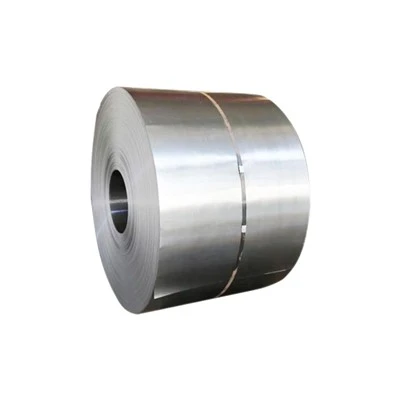
Hey there, if you've ever ordered stainless steel coils for manufacturing, construction, or any industrial project, you've probably run into two terms that sound similar but make a huge difference: hot-rolled and cold-rolled stainless steel coils. I'm Sarah, part of the team at our stainless steel coil supplier, and I've spent the last 8 years helping shops, fabricators, and big manufacturers pick the right coil for their work. I've seen folks mix these two up all the time, and that mix-up can lead to wasted material, delayed projects, or even parts that don't hold up the way they should. Today, let's break down the real difference between hot-rolled and cold-rolled stainless steel coils-no fancy jargon, just straight talk that actually helps you make the right call.
First, let's start with the basics of how each is made, because that's where the whole difference starts. Hot-rolled stainless steel is what you get when you heat a solid stainless steel slab (think big, thick blocks of metal straight from the mill) way above its recrystallization temperature-for most stainless steels, that's around 1,900°F or higher. At that temp, the metal is super soft and easy to shape, so we run it through huge rollers that press it down into thin, uniform sheets, and then wind those sheets into coils. Wait, and since it's hot, right after rolling it cools naturally in air, no special treatment. That's the hot part, no mystery there.
Cold-rolled is the exact opposite on the temperature front. It starts as hot-rolled coil first-we've got to make that as a base anyway-but then we run it through rollers at room temperature, way below that recrystallization temp. That's where the "cold" name comes from. Every pass through the cold rollers makes the metal harder, actually working it to get tighter tolerances and a smoother surface. A quick side note: if you need to dig into specific grades, we've got popular options like 304 Stainless Steel Coil-super versatile, great for food equipment and trim, and it works for both hot and cold rolled variants.
Now, let's get into the key differences that actually matter for your project. Let's start with size and tolerance, because that's a big one. Hot-rolled coils are looser in dimensions, usually. Since we're working with super hot metal, it can shift a little as it cools, so the thickness might vary by a few thousandths of an inch. That's totally fine for projects where exact measurements aren't make-or-break, like structural steel beams or large parts for machinery that doesn't need tight fits. Cold-rolled, though? We're rolling at room temp, so we can control the thickness way more precisely-often within a few ten-thousandths of an inch. If you're making parts that slot together, like car panels or kitchen appliances, that tight tolerance is non-negotiable. That's why a lot of custom fabricators prefer cold-rolled for those jobs.
Next up, surface finish. This is the part that people notice first, whether it's a visible part or something that just needs to look sharp. Hot-rolled stainless has a rough, scaly surface from that high-heat cooling-we call that the "scale layer," which is actually a mix of iron oxides that forms when the hot metal reacts with air. It's not pretty, and it's definitely not smooth. You'd use hot-rolled where the surface is going to be covered, or where you don't care about looks, like industrial pipe supports or large storage tanks. On the flip side, cold-rolled has a way smoother surface because there's no scaling from high-heat cooling, plus the cold rolling process finishes it super even. The standard finish for cold-rolled is 2B Stainless Steel Coil-you've probably seen that on refrigerators, dishwasher panels, or even outdoor signage, because it's sleek and easy to polish if you want. We also have No.1 Stainless Steel Coil, which is the hot-rolled equivalent, perfect for those utilitarian projects where looks don't matter as much.
Durability and strength are another big one, and this ties back to that cold rolling step. When you work metal at room temp, it undergoes strain hardening, right? That makes cold-rolled stainless way harder and stronger than hot-rolled of the same grade. Wait, but that's not always a good thing-if you need to bend or form the metal, cold-rolled is harder, so it might crack if you don't plan for that extra strength. Hot-rolled is softer, so it's way more malleable, perfect for deep drawing or bending parts that have sharp curves. I learned that the hard way early on-we had a customer try to make custom metal buckets out of cold-rolled hot coil? No, wait, he used cold-rolled, and it split when he tried to form the bottom. Switched to hot-rolled, and it worked like a charm. For reference, grades like 347 Stainless Steel Coil are great for high-heat applications, and they come in both variants too-just depends if you need formability or strength.
Wait, also let's talk about edge quality. Hot-rolled coils have rough, slaggy edges because when the slab is cut after rolling, the hot metal can chip and leave uneven sides. You'll usually have to trim those edges before you can use them. Cold-rolled, though, the edges are clean, sharp, and uniform because the cold rolling process cuts or trims the edges precisely before winding into coils. That saves you a step in your fabrication process, which is a win for time and money.
Cost is a factor too, let's be real. Hot-rolled stainless is cheaper because it takes less processing-no cold rolling step, no extra finishing, it's faster to make. Cold-rolled requires that extra round of rolling, plus the surface work to get rid of any tiny imperfections that show up when you work it cold, so it's a bit pricier. It's not a huge gap, but it's enough that if you don't need the tighter tolerances or smooth surface, going hot-rolled is the smarter financial call.
Wait, and let's clear up a common myth: people think hot-rolled is always lower quality, but that's not true. It's just suited for different jobs. If you're building a bridge support that's going to be buried underground, hot-rolled is perfect-its strength is more than enough, and the rough surface actually helps with grip so it doesn't shift in concrete. If you're making a stainless steel sink, cold-rolled is the only way to go because you need to form that deep bowl without cracking, and it needs to look smooth.
Now, who should pick which? Let's run through a quick cheat sheet to make it easy. Go hot-rolled stainless steel coil if: you're working on structural parts, large tanks, industrial piping, projects where surface finish doesn't matter, or you need maximum formability for deep draws. Go cold-rolled if: you need tight dimensional tolerances, a smooth, finished surface for visible parts, higher strength for smaller, precision parts, or you want to save fabrication steps like edge trimming.
A quick note on grades, too-most common grades like 304 and 316 come in both hot and cold rolled, so you don't have to sacrifice corrosion resistance for formability or strength. For example, 304 Stainless Steel Coil is the most popular overall, used in everything from food processing to architectural trim, and it's available in both variants depending on your needs. If you're working in high-heat environments, like for exhaust systems or chemical processing equipment, 347 Stainless Steel Coil is a go-to, and we offer both hot and cold rolled options there too. We also stock A240 Stainless Steel Coil, which meets those strict ASTM standards for pressure vessels and industrial equipment, so you know it's reliable no matter which rolling type you choose.
I get it, picking the right coil can feel overwhelming, especially if you're new to working with stainless steel. That's why our team is always here to walk through your project, ask the right questions, and point you to the exact coil you need-whether it's hot-rolled for a big structural job or cold-rolled for a custom part that needs to look good and fit perfectly. We've spent years supplying stainless steel coils to small fabricators and big manufacturers alike, so we know what works for different projects, and we're not here to upsell you on something you don't need.
If you're working on a project right now and you're not sure if hot or cold rolled is the way to go, or you need help tracking down a specific grade like No.1 Stainless Steel Coil or 2B Stainless Steel Coil, don't hesitate to reach out to our team. We can answer any questions, send over specs, and even help you calculate how much you need so you don't order more than you have to. No sales pitches, just straight answers from folks who actually work with this stuff every day.
References:


- ASM International. (2019). Materials Park: Hot Rolling and Cold Rolling of Stainless Steels.
- ASTM International. (2021). Standard Specification for Pressure Vessel Plates, Alloy Steel, Chromium-Nickel (A240).
- Stainless Steel World. (2022). "Surface Finishes in Stainless Steel Fabrication: A Practical Guide."
- The Fabricator. (2023). "Choosing Between Hot-Rolled and Cold-Rolled Steel: Key Considerations for Fabricators."