Hey there! As a silicon steel supplier, I've been getting a lot of questions about how the rolling direction of silicon steel affects its magnetic properties. So, I thought I'd take a deep dive into this topic and share what I've learned.
First off, let's talk about what silicon steel is. Silicon steel, also known as electrical steel, is a type of steel alloy that contains silicon. It's widely used in electrical equipment like transformers, motors, and generators because of its excellent magnetic properties. The addition of silicon helps to reduce the core losses and improve the magnetic permeability of the steel.
Now, let's get into the rolling direction. When silicon steel is produced, it goes through a rolling process. This process can be done in different directions, and this has a significant impact on the magnetic properties of the steel.
Rolling Direction Basics
There are two main types of rolling directions: grain - oriented and non - grain - oriented.
Grain - Oriented Silicon Steel
Grain - oriented silicon steel is rolled in such a way that the grains in the steel are aligned in a specific direction. This alignment is achieved through a series of complex manufacturing processes. The result is a steel with highly anisotropic magnetic properties. In the direction of the grain orientation, the magnetic permeability is very high, and the core losses are very low. This makes it ideal for applications where the magnetic flux flows in a single direction, such as in the cores of power transformers.
For example, if you're using M19 Silicon Steel, which is a type of grain - oriented silicon steel, you'll notice that it performs best when the magnetic field is applied in the direction of the grain orientation. The magnetic domains in the steel can easily align with the external magnetic field, leading to efficient magnetic flux transfer.
Non - Grain - Oriented Silicon Steel
On the other hand, non - grain - oriented silicon steel has a more random grain structure. The grains are not aligned in a particular direction. This type of steel has more isotropic magnetic properties, meaning its magnetic performance is relatively similar in all directions. It's commonly used in applications where the magnetic field changes direction, such as in electric motors.
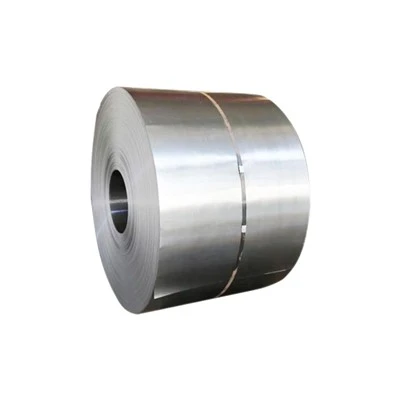
Take the 50W600 Silicon Steel Coil for instance. It's a non - grain - oriented silicon steel. It can handle magnetic fields that come from different directions, making it suitable for motors where the magnetic field rotates.
Impact on Magnetic Properties
Magnetic Permeability
The rolling direction has a huge impact on magnetic permeability. In grain - oriented silicon steel, as I mentioned earlier, the magnetic permeability is much higher in the direction of the grain orientation. This means that the steel can easily conduct magnetic flux in that direction. In non - grain - oriented silicon steel, the magnetic permeability is more uniform in all directions, but generally lower compared to the peak permeability of grain - oriented steel in its preferred direction.
Core Losses
Core losses are another important aspect. Core losses occur due to hysteresis and eddy currents in the steel. In grain - oriented silicon steel, the core losses are minimized in the direction of the grain orientation. This is because the aligned grains reduce the resistance to the movement of magnetic domains, resulting in less energy being dissipated as heat. Non - grain - oriented silicon steel has relatively higher core losses, but it's a trade - off for its ability to handle multi - directional magnetic fields.
Saturation Induction
The saturation induction of silicon steel is also affected by the rolling direction. Grain - oriented silicon steel can reach higher saturation induction levels in the direction of the grain orientation. This is beneficial in applications where high magnetic flux densities are required. Non - grain - oriented silicon steel has a more consistent saturation induction across different directions, but the maximum value may be lower compared to grain - oriented steel in its optimal direction.
Real - World Applications
Let's look at some real - world applications to understand how the rolling direction matters.
Transformers
In power transformers, grain - oriented silicon steel is the go - to choice. The magnetic flux in a transformer core flows in a specific direction, and using grain - oriented steel helps to reduce core losses and improve the efficiency of the transformer. The B50A800 Silicon Steel Coil can be used in transformers, and its grain - oriented structure ensures that the magnetic flux is transferred efficiently.
Electric Motors
For electric motors, non - grain - oriented silicon steel is more suitable. Motors have a rotating magnetic field, and non - grain - oriented steel can handle the changing magnetic field directions without significant performance degradation.

Choosing the Right Silicon Steel
When choosing silicon steel for your application, you need to consider the rolling direction and its impact on magnetic properties. If your application has a unidirectional magnetic field, like a transformer, grain - oriented silicon steel is the way to go. If the magnetic field changes direction, such as in a motor, non - grain - oriented silicon steel is a better option.
As a silicon steel supplier, I can help you select the right type of silicon steel for your specific needs. Whether you need M19 Silicon Steel for a high - efficiency transformer or 50W600 Silicon Steel Coil for an electric motor, I've got you covered.
If you're interested in purchasing silicon steel or have any questions about the rolling direction and its impact on magnetic properties, feel free to reach out. I'm here to assist you in making the best choice for your project.
References
- "Electrical Steels: Fundamentals and Applications" by J. E. Evetts
- "Magnetic Materials and Their Applications" by D. C. Jiles