A millimeter off on a U-channel can delay a project for days, throw off weld tolerances, or create safety risks. Accuracy isn't accidental-it's built into every step. Here's how we do it.


- Start with the right raw material
Inconsistent chemistry warps during rolling. For structural support, ASTM A36 is the go-to for strength and weldability; for square bars, 1018 offers machinability but its carbon content needs tight control to avoid uneven hardness. We check mill test reports for every heat and only process if chemistry falls within spec.
- Master the rolling process
This is where most dimensional issues start. For heavy shapes like Q235 H beam, web and flange dimensions depend on even roll pressure through each pass. We do daily laser alignment checks on every roll stand. For lighter profiles like Q275 angle, rolling temperature matters-too hot and the steel shrinks, too cold and it deforms unevenly. We track temperature with pyrometers at every stage and adjust for shop conditions.
- Don't skip cooling and straightening
Uneven cooling causes distortion. We use controlled cooling on temperature-matched beds with uniform air, then hydraulic straightening presses calibrated to 0.2mm per meter-not manual hammering, which introduces human error. Our A36 U-channel now holds straightness to within 0.5mm per meter.
- Measurement depends on tools and team
We use digital calipers, laser scanners, and CMMs for final inspection. Long profiles run through a laser scanner every 2 feet to catch subtle variations. Tools are calibrated monthly, and we reject any batch where more than 2% of pieces fall outside tolerance.
- Handling and packaging matter too
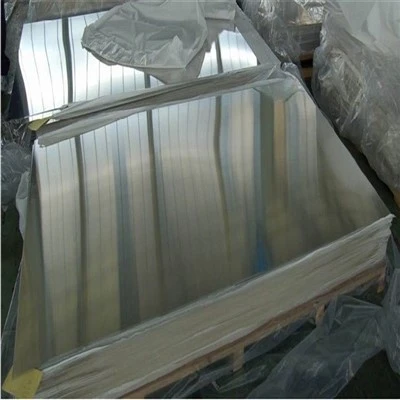
Each profile is wrapped in protective film and stacked on custom crates with wooden spacers for long pieces. Every shipment includes a dimensional sheet listing exact measurements so customers can verify on-site.