Thermal conductivity is a fundamental property that significantly influences the performance and application of tool steel in various industrial processes. As a leading supplier of high - quality tool steel, understanding and communicating the thermal conductivity of our products is crucial for our customers. In this blog, we will delve into what thermal conductivity is, how it affects tool steel, and explore the thermal conductivities of some of our most popular tool steel grades.
What is Thermal Conductivity?
Thermal conductivity, denoted by the symbol (k), is a measure of a material's ability to conduct heat. It is defined as the quantity of heat (in watts) that passes through a unit area (in square meters) of a material per unit time (in seconds) when there is a unit temperature gradient (in kelvins per meter) across the material. Mathematically, it is expressed by Fourier's Law of Heat Conduction:
(q=-k\frac{dT}{dx})
where (q) is the heat flux (heat transfer rate per unit area), (\frac{dT}{dx}) is the temperature gradient across the material. A high thermal conductivity means that the material can transfer heat quickly, while a low thermal conductivity implies that the material is a poor conductor of heat and can act as an insulator to some extent.


Importance of Thermal Conductivity in Tool Steel
In the context of tool steel, thermal conductivity plays several vital roles.
1. Heat Dissipation during Machining
When tools are used in machining operations such as cutting, grinding, or stamping, a significant amount of heat is generated due to friction between the tool and the workpiece. A tool steel with high thermal conductivity can efficiently transfer this heat away from the cutting edge. This helps to maintain a lower temperature at the tool - workpiece interface, reducing the risk of tool wear and deformation. As a result, the tool can maintain its sharpness and dimensional accuracy for a longer time, leading to improved machining quality and longer tool life.
2. Thermal Stresses
During rapid heating and cooling cycles, thermal stresses can develop within the tool steel. If the thermal conductivity is low, the temperature distribution within the tool may be uneven, causing large thermal gradients. These thermal gradients can lead to high thermal stresses, which may result in cracking, warping, or other forms of damage to the tool. A tool steel with good thermal conductivity can minimize these thermal gradients and the associated stresses, enhancing the tool's durability and reliability.
3. Heat Treatment
Heat treatment is a critical process in manufacturing tool steel to obtain the desired mechanical properties. Thermal conductivity affects how quickly the tool steel can be heated or cooled during heat treatment. A material with high thermal conductivity allows for more uniform heating and cooling, resulting in more consistent microstructures and properties throughout the tool.
Thermal Conductivity of Common Tool Steel Grades
Let's take a look at the thermal conductivities of some of our popular tool steel grades.
A2 Tool Steel
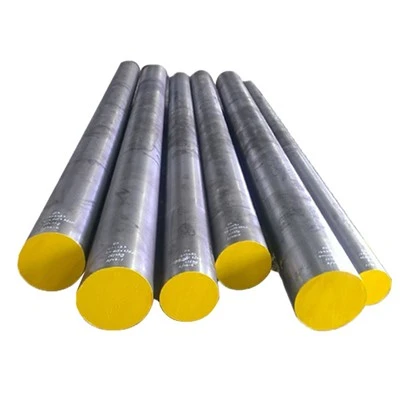
A2 Tool Steel Bar and A2 Tool Steel Plate are widely used in applications such as punches, dies, and shear blades. A2 tool steel has a relatively moderate thermal conductivity compared to some other grades. At room temperature, its thermal conductivity is approximately (25 - 30\space W/(m\cdot K)). This value allows for reasonable heat transfer during machining, which helps in maintaining a stable cutting edge temperature. The alloying elements in A2 tool steel, such as chromium and molybdenum, contribute to its high wear resistance but also influence its thermal conductivity.
SKD61 Tool Steel
SKD61 Tool Steel is a hot - work tool steel commonly used in die - casting molds, hot forging dies, and extrusion dies. It has a relatively good thermal conductivity, typically around (30 - 35\space W/(m\cdot K)) at room temperature. This high thermal conductivity is crucial in hot - work applications as it enables efficient heat dissipation from the mold surface during the casting process. This helps to prevent overheating of the mold, which can lead to premature wear, cracking, and reduced dimensional accuracy of the cast parts.
D2 Tool Steel Bar
D2 Tool Steel Bar is known for its high wear resistance and high - hardness properties. However, it has a relatively low thermal conductivity compared to some other tool steel grades. At room temperature, its thermal conductivity is approximately (18 - 22\space W/(m\cdot K)). The low thermal conductivity of D2 tool steel can be a disadvantage in applications where rapid heat dissipation is required. However, its excellent wear - resistant properties make it suitable for applications such as cold - work dies, punches, and gauges where heat generation may not be as critical.
O1 Tool Steel Bar
O1 Tool Steel Bar is an oil - hardening tool steel. It has a thermal conductivity of about (32 - 36\space W/(m\cdot K)) at room temperature. This relatively high thermal conductivity allows for efficient heat transfer during heat treatment and machining operations. O1 tool steel is often used in applications such as small - scale cutting tools, taps, and reamers. The good thermal conductivity helps in maintaining the tool's performance and integrity during use.
Factors Affecting the Thermal Conductivity of Tool Steel
Several factors can influence the thermal conductivity of tool steel.
Alloying Elements
As mentioned earlier, alloying elements play a significant role in determining the thermal conductivity of tool steel. Elements such as chromium, molybdenum, and vanadium can form carbides in the steel matrix, which can scatter phonons (the carriers of heat in solids) and reduce the thermal conductivity. On the other hand, some elements like carbon can also affect the crystal structure and defect density of the steel, thereby influencing the thermal conductivity.
Microstructure
The microstructure of tool steel, including the grain size, phase distribution, and presence of inclusions, can have a profound impact on its thermal conductivity. A finer grain size generally leads to more grain boundaries, which can scatter phonons and reduce the thermal conductivity. Additionally, the presence of secondary phases or inclusions can also act as scattering centers for heat carriers, decreasing the thermal conductivity.
Temperature
The thermal conductivity of tool steel is also temperature - dependent. In general, the thermal conductivity of metals decreases with increasing temperature. This is because as the temperature rises, the lattice vibrations become more intense, which increases the scattering of phonons and reduces their mean free path.
Considerations for Customers
When selecting a tool steel for a specific application, the thermal conductivity should be one of the key factors to consider. If the application involves high heat generation, such as high - speed machining or hot - work processes, a tool steel with high thermal conductivity is recommended to ensure efficient heat dissipation and prevent premature tool failure. On the other hand, if wear resistance is the primary concern and heat generation is relatively low, a tool steel with lower thermal conductivity but high wear - resistant properties may be a better choice.
We understand that every customer's needs are unique, and we are committed to providing the right tool steel solutions based on your requirements. Our team of experts is available to assist you in selecting the most suitable tool steel grade with the appropriate thermal conductivity for your application.
If you are in the market for tool steel and want to discuss your specific needs, we encourage you to reach out to us. Whether you are looking for A2 Tool Steel Bar, SKD61 Tool Steel, D2 Tool Steel Bar, O1 Tool Steel Bar, or A2 Tool Steel Plate, we can offer high - quality products and professional advice. Contact us today to start the procurement and negotiation process, and let us help you achieve the best results in your projects.
References
- ASM Handbook, Volume 1: Properties and Selection: Irons, Steels, and High - Performance Alloys.
- Harris, J. C. (Ed.). (2002). Thermal conductivity: theory, properties, and applications. Springer Science & Business Media.
- Tool Steel Selection Guide, Various Technical Publications from Steel Manufacturers.