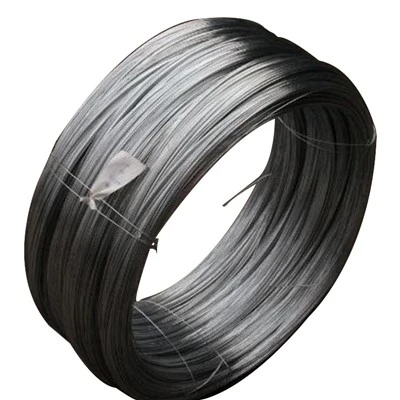
What is the impact resistance of carbon steel wire?
As a seasoned carbon steel wire supplier, I've witnessed firsthand the diverse applications and performance requirements of this remarkable material. One crucial aspect that often comes under scrutiny is the impact resistance of carbon steel wire. In this blog, we'll delve into the factors that influence impact resistance, explore different types of carbon steel wire, and understand why it matters in various industries.
Understanding Impact Resistance
Impact resistance refers to a material's ability to withstand sudden forces or shocks without breaking or deforming permanently. When it comes to carbon steel wire, this characteristic is of utmost importance, especially in applications where the wire is subject to dynamic loads. For instance, in construction, carbon steel wire is used in reinforcement structures that may experience seismic activity or heavy machinery impacts. In automotive manufacturing, it's used in components like springs and cables that need to endure sudden jolts and vibrations.
The impact resistance of carbon steel wire is determined by several factors, including its chemical composition, microstructure, and manufacturing process. Let's take a closer look at each of these elements.
Chemical Composition
The chemical makeup of carbon steel wire plays a significant role in its impact resistance. The primary elements in carbon steel are iron and carbon, with the carbon content being a key determinant of the wire's properties. Generally, as the carbon content increases, the strength and hardness of the wire also increase. However, high carbon content can make the wire more brittle, potentially reducing its impact resistance.
- Low Carbon Steel Wire: Wires with a carbon content of up to 0.3% are considered low carbon steel wires. These wires are relatively soft and ductile, offering good formability and weldability. They also exhibit decent impact resistance, making them suitable for applications where flexibility is required. For example, Q195 Carbon Steel Wire is a popular choice for general-purpose applications such as fencing and binding due to its combination of strength and impact resistance.
- Medium Carbon Steel Wire: With a carbon content ranging from 0.3% to 0.6%, medium carbon steel wires offer a balance between strength and ductility. They have better impact resistance compared to high carbon steel wires while still maintaining relatively high strength. 45# Carbon Steel Wire is a common medium carbon steel wire used in applications like springs and fasteners, where it needs to withstand repeated impacts and maintain its shape.
- High Carbon Steel Wire: Wires with a carbon content above 0.6% are classified as high carbon steel wires. These wires are extremely strong and hard but can be brittle. They have lower impact resistance compared to low and medium carbon steel wires, especially when not properly heat-treated. However, when heat-treated correctly, high carbon steel wires can offer excellent wear resistance and high tensile strength, making them suitable for applications such as saw blades and cutting tools.
Microstructure
The microstructure of carbon steel wire also affects its impact resistance. The arrangement and distribution of different phases within the steel, such as ferrite, pearlite, and cementite, can influence how the wire responds to impact loads. For example, a fine-grained microstructure generally provides better impact resistance than a coarse-grained one. This is because fine grains can more effectively resist crack propagation, allowing the wire to absorb energy during impact without fracturing.
Heat treatment processes, such as quenching and tempering, are commonly used to modify the microstructure of carbon steel wire and improve its impact resistance. Quenching involves rapidly cooling the wire from a high temperature, which forms a hard and brittle martensitic structure. Tempering is then carried out to reduce the brittleness and improve the toughness of the wire by transforming some of the martensite into a more ductile structure.
Manufacturing Process
The manufacturing process of carbon steel wire can have a significant impact on its impact resistance. The way the wire is drawn, annealed, and finished can all affect its mechanical properties. For example, cold drawing is a common process used to reduce the diameter of the wire and increase its strength. However, excessive cold working can lead to work hardening, which may reduce the wire's impact resistance. Therefore, it's important to control the amount of cold work and the subsequent heat treatment to ensure optimal performance.
Annealing is another important step in the manufacturing process. It involves heating the wire to a specific temperature and then slowly cooling it to relieve internal stresses and improve its ductility. Proper annealing can enhance the impact resistance of the wire by reducing the risk of cracks and improving the overall homogeneity of the microstructure.
Different Types of Carbon Steel Wire and Their Impact Resistance
Now, let's take a look at some specific types of carbon steel wire and their impact resistance characteristics.


- Q275 Carbon Steel Wire: This is a high-strength carbon steel wire with good toughness and impact resistance. It's commonly used in construction, manufacturing, and automotive industries for applications such as wire rope, springs, and fasteners. Q275 carbon steel wire has a relatively high carbon content and is often heat-treated to improve its mechanical properties.
- 1010 Carbon Steel Wire: A low carbon steel wire with excellent formability and weldability. It has a carbon content of around 0.10%, making it relatively soft and ductile. 1010 carbon steel wire offers good impact resistance and is commonly used in applications such as fencing, wire mesh, and electrical wiring.
- 1020 Carbon Steel Wire: This medium carbon steel wire has a carbon content of approximately 0.20%. It combines good strength with decent impact resistance and is often used in applications where higher strength is required compared to low carbon steel wires. 1020 carbon steel wire is commonly used in springs, nails, and screws.
Why Impact Resistance Matters
The impact resistance of carbon steel wire is crucial in many industries for several reasons.
- Safety: In industries such as construction and automotive, the safety of structures and vehicles depends on the ability of carbon steel wire to withstand impact loads. For example, in a building, carbon steel wire used in reinforcement bars needs to be able to resist the forces generated during an earthquake or a collision. In a car, the springs and cables made of carbon steel wire need to function properly even under sudden impacts to ensure the safety of the passengers.
- Durability: Carbon steel wire with good impact resistance is more durable and can withstand repeated impacts over time without failing. This reduces the need for frequent replacements and maintenance, resulting in cost savings for businesses. For example, in a mining operation, the wire ropes used in hoisting equipment need to have high impact resistance to withstand the harsh conditions and heavy loads.
- Performance: In applications where the wire is subjected to dynamic loads, such as in machinery and equipment, good impact resistance is essential for maintaining optimal performance. For example, in a conveyor system, the carbon steel wire used in the belts needs to be able to withstand the impacts of the transported materials without breaking or deforming.
Conclusion
In conclusion, the impact resistance of carbon steel wire is a complex property that depends on several factors, including its chemical composition, microstructure, and manufacturing process. Different types of carbon steel wire offer varying levels of impact resistance, making them suitable for different applications. As a carbon steel wire supplier, we understand the importance of providing high-quality products that meet the specific requirements of our customers. Whether you need low carbon steel wire for its flexibility and good impact resistance or high carbon steel wire for its strength and wear resistance, we have the expertise and resources to supply you with the right product.
If you're in the market for carbon steel wire and want to learn more about our products and how they can meet your needs, we invite you to start a conversation with us. We're more than happy to provide you with detailed product information, samples of our carbon steel wire, and answer any questions you may have. Our team of experts is dedicated to helping you find the best carbon steel wire solutions for your applications.
References
- ASM Handbook Volume 1: Properties and Selection: Irons, Steels, and High-Performance Alloys. ASM International.
- Callister, W. D., & Rethwisch, D. G. (2010). Materials Science and Engineering: An Introduction. Wiley.
- Degarmo, E. P., Black, J. T., & Kohser, R. A. (2003). Materials and Processes in Manufacturing. Wiley.