Elasticity is a fundamental property that significantly influences the performance and application of spring steel bars. As a dedicated spring steel bar supplier, I've witnessed firsthand how understanding the elasticity of these materials can make a substantial difference in various industries. In this blog, I'll delve into what the elasticity of spring steel bars is, why it matters, and how it relates to our product offerings.
What is Elasticity?
Elasticity, in the context of materials science, refers to a material's ability to deform under stress and return to its original shape once the stress is removed. When a force is applied to a spring steel bar, it causes the bar to change its shape. This change can be in the form of stretching, compressing, or bending. As long as the applied stress remains within the elastic limit of the material, the bar will regain its initial shape when the force is no longer acting on it.
The elastic behavior of spring steel bars is governed by Hooke's Law, which states that the force required to stretch or compress a spring is directly proportional to the displacement of the spring from its equilibrium position. Mathematically, it can be expressed as F = kx, where F is the force applied, k is the spring constant (a measure of the stiffness of the spring), and x is the displacement.
Factors Affecting the Elasticity of Spring Steel Bars
Several factors can influence the elasticity of spring steel bars. One of the most crucial factors is the chemical composition of the steel. Different alloying elements are added to the steel to enhance its properties. For example, manganese can improve the hardenability and strength of the steel, while silicon can increase its resistance to oxidation and improve its elastic limit.
The heat treatment process also plays a vital role. Proper heat treatment can refine the grain structure of the steel, which in turn affects its elasticity. Quenching and tempering are common heat treatment methods used for spring steel bars. Quenching rapidly cools the steel from a high temperature, which can increase its hardness. Tempering is then performed to relieve the internal stresses generated during quenching and to improve the toughness and elasticity of the steel.
The manufacturing process can also impact the elasticity. Cold working, such as cold drawing or cold rolling, can increase the strength and hardness of the steel bar, but it may also reduce its ductility and elasticity if not properly controlled. On the other hand, hot working can improve the homogeneity of the steel and enhance its overall mechanical properties.
Importance of Elasticity in Spring Steel Bars
The elasticity of spring steel bars is of utmost importance in a wide range of applications. In automotive industries, spring steel bars are used in suspension systems. The ability of these bars to deform and return to their original shape allows them to absorb shocks and vibrations, providing a smooth and comfortable ride. If the spring steel bars lack sufficient elasticity, the suspension system may not function properly, leading to a rough ride and potential damage to the vehicle.


In the aerospace industry, spring steel bars are used in various components, such as landing gear and control systems. The high elasticity of these bars ensures reliable performance under extreme conditions, including high temperatures and pressures. Any failure due to insufficient elasticity could have catastrophic consequences.
In consumer products, such as mattresses and furniture, spring steel bars are used to provide support and comfort. The elasticity of these bars determines how well they can adapt to the body's shape and distribute weight evenly, enhancing the overall user experience.
Our Spring Steel Bar Offerings
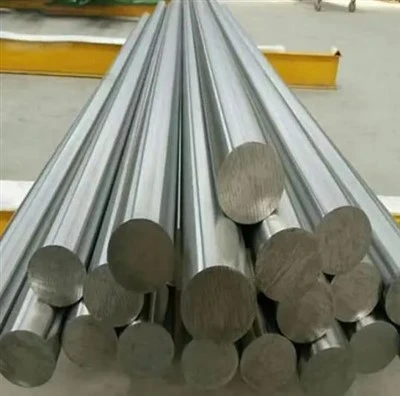
As a spring steel bar supplier, we offer a diverse range of products to meet the specific needs of our customers. Our 1095 Spring Steel Bar is known for its high carbon content, which gives it excellent hardness and wear resistance. It also has good elasticity, making it suitable for applications where high strength and resilience are required, such as in springs for heavy machinery.
The 5160 Alloy Spring Steel Bar is an alloy steel that contains chromium and vanadium. These alloying elements enhance its strength, toughness, and fatigue resistance. It has a relatively high elastic limit, making it ideal for applications in automotive suspension systems and other high-stress environments.
Our 55SiMnVB Spring Steel Bar is a special alloy spring steel. The addition of silicon, manganese, vanadium, and boron improves its hardenability, strength, and elasticity. It is often used in applications where high performance and reliability are essential, such as in high-speed railway systems and aerospace components.
Testing the Elasticity of Spring Steel Bars
To ensure the quality and performance of our spring steel bars, we conduct rigorous testing of their elasticity. One of the common methods is the tensile test. In a tensile test, a sample of the spring steel bar is subjected to a gradually increasing tensile force until it breaks. During the test, the stress and strain are measured, and the elastic modulus can be calculated. The elastic modulus is a measure of the stiffness of the material and is an important parameter for evaluating its elasticity.
Another method is the fatigue test. Spring steel bars are often subjected to repeated loading and unloading cycles in real applications. The fatigue test simulates these conditions by applying a cyclic load to the bar and measuring the number of cycles it can withstand before failure. This test helps us understand the fatigue resistance of the spring steel bars, which is closely related to their elasticity.
Conclusion
In conclusion, the elasticity of spring steel bars is a critical property that determines their performance and suitability for various applications. Understanding the factors that affect elasticity, such as chemical composition, heat treatment, and manufacturing process, is essential for producing high-quality spring steel bars.
As a spring steel bar supplier, we are committed to providing our customers with products that meet the highest standards of quality and performance. Our diverse range of spring steel bars, including 1095 Spring Steel Bar, 5160 Alloy Spring Steel Bar, and 55SiMnVB Spring Steel Bar, offers excellent elasticity and other desirable properties to meet the specific needs of different industries.
If you are in need of high-quality spring steel bars, we invite you to contact us for procurement and further discussions. Our team of experts is ready to assist you in selecting the most suitable products for your applications.
References
- Callister, W. D., & Rethwisch, D. G. (2014). Materials Science and Engineering: An Introduction. Wiley.
- ASM Handbook Committee. (2005). ASM Handbook Volume 1: Properties and Selection: Irons, Steels, and High-Performance Alloys. ASM International.
- Dieter, G. E. (1986). Mechanical Metallurgy. McGraw-Hill.