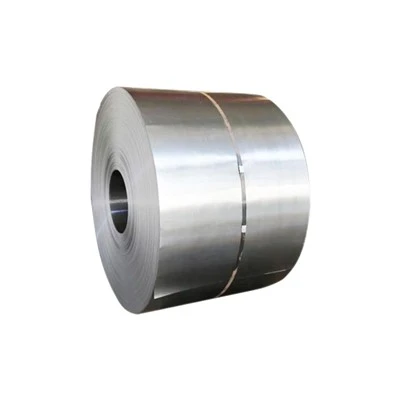
Hey there! As a stainless steel coil supplier, I often get asked about the differences between various types of stainless steel coils. It's a topic that's not only important for those in the industry but also for anyone looking to use stainless steel in their projects. So, let's dive right in and explore these differences.
1. Composition
Stainless steel is an alloy, which means it's made up of different elements. The main element in all stainless steel is iron, but what sets different types apart is the percentage of other elements like chromium, nickel, molybdenum, and carbon.
-
304 Stainless Steel Coil: This is one of the most common types of stainless steel coils. It contains about 18 - 20% chromium and 8 - 10.5% nickel. The high chromium content gives it excellent corrosion resistance, and the nickel helps to maintain its austenitic structure, which makes it non - magnetic and ductile. You can find more details about 304 Stainless Steel Coil.
-
316 Stainless Steel Coil: Similar to 304, but with an added 2 - 3% molybdenum. Molybdenum enhances the corrosion resistance, especially in environments with chlorides, such as marine settings. It also has a slightly higher nickel content, around 10 - 14%. Check out 316 Stainless Steel Coil for more info.
-
A240 Stainless Steel Coil: This is a standard specification for stainless and heat - resistant chromium and chromium - nickel steel plate, sheet, and strip. It covers a wide range of grades, including 304 and 316. The A240 designation ensures that the material meets certain quality and performance standards. You can learn more about A240 Stainless Steel Coil.
2. Corrosion Resistance
Corrosion resistance is a key factor when choosing a stainless steel coil.
-
304 Stainless Steel Coil: It has good general corrosion resistance in many environments, such as normal atmospheric conditions and in most food - processing applications. However, in environments with high chloride levels, like near the ocean or in some chemical processing plants, it may start to corrode over time.
-
316 Stainless Steel Coil: Thanks to the molybdenum, it has significantly better corrosion resistance in chloride - rich environments. This makes it a popular choice for marine equipment, industrial applications where exposure to chemicals is likely, and in architectural applications near the coast.
-
A240 Stainless Steel Coil: Since it encompasses various grades, the corrosion resistance can vary. But because it's a standardized product, you can be more confident in its performance as long as you select the appropriate grade for your specific environment.
3. Strength and Ductility
Strength and ductility are important for different applications.
-
304 Stainless Steel Coil: It has good strength and excellent ductility. This means it can be easily formed into different shapes, such as being bent, drawn, or stamped. It's often used in applications where complex forming operations are required, like in the manufacturing of kitchenware, sinks, and automotive trim.
-
316 Stainless Steel Coil: It also has good strength, but it's slightly less ductile than 304. This is because the addition of molybdenum makes the material a bit stiffer. However, it still has enough ductility for many common applications, especially in structural and marine applications where strength and corrosion resistance are crucial.
-
A240 Stainless Steel Coil: Again, the strength and ductility depend on the specific grade. But overall, as a standardized product, it offers reliable mechanical properties within the range of the specified grade.
4. Weldability
Weldability is an important consideration, especially in fabrication processes.
-
304 Stainless Steel Coil: It has excellent weldability. It can be welded using common welding methods such as TIG (Tungsten Inert Gas) welding, MIG (Metal Inert Gas) welding, and stick welding. After welding, it retains its corrosion resistance and mechanical properties well.
-
316 Stainless Steel Coil: It is also weldable, but special care needs to be taken during welding. The molybdenum in 316 can cause some issues, such as the formation of intermetallic compounds if the welding parameters are not properly controlled. However, with the right techniques and filler materials, good welds can be achieved.


-
A240 Stainless Steel Coil: The weldability depends on the specific grade within the A240 specification. Generally, the more common grades like 304 and 316 follow the weldability characteristics described above.
5. Cost
Cost is always a factor in any purchasing decision.
-
304 Stainless Steel Coil: It is relatively less expensive compared to 316. This is because it has a lower nickel and no molybdenum content. It's a cost - effective option for applications where high - end corrosion resistance is not required.
-
316 Stainless Steel Coil: Due to the higher nickel and molybdenum content, it is more expensive than 304. But the added cost is justified in applications where superior corrosion resistance is essential.
-
A240 Stainless Steel Coil: The cost varies depending on the grade. If you choose a grade similar to 304, it will be more affordable, while a grade similar to 316 will be more costly.
6. Applications
The differences in composition, corrosion resistance, strength, and cost lead to different applications for each type of stainless steel coil.
-
304 Stainless Steel Coil: It's widely used in the food and beverage industry for equipment like storage tanks, conveyors, and processing machinery. It's also common in architectural applications for facades, handrails, and decorative elements. In the automotive industry, it's used for trim and exhaust systems.
-
316 Stainless Steel Coil: As mentioned earlier, it's a go - to choice for marine applications, such as boat fittings, offshore platforms, and desalination plants. It's also used in chemical processing plants, pharmaceutical manufacturing, and in some high - end kitchen equipment where exposure to harsh chemicals or salts is possible.
-
A240 Stainless Steel Coil: With its wide range of grades, it can be used in all the applications mentioned above. The A240 specification ensures that the material meets certain quality standards, making it suitable for a variety of industries.
So, there you have it! These are the main differences between different types of stainless steel coils. Whether you're in the market for a 304, 316, or an A240 stainless steel coil, understanding these differences will help you make the right choice for your project.
If you're interested in purchasing stainless steel coils, feel free to reach out for a detailed discussion about your specific requirements. We can help you select the best type of coil for your application, ensuring you get the most value for your money.
References
- ASM Handbook Volume 13A: Corrosion
- Stainless Steel World magazine articles
- Technical data sheets from stainless steel manufacturers