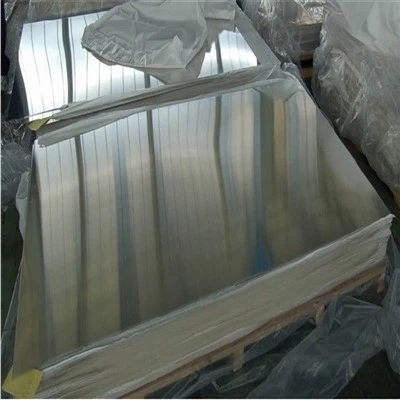
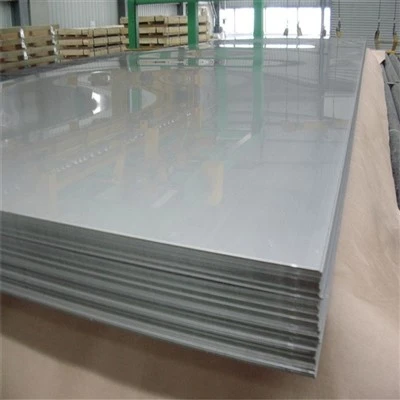
If you've ever worked with heavy industrial equipment, pressure vessels, or high-stress structural components, you know alloy steel plates are the backbone of durability and performance. As a supplier who's spent 12 years working directly with manufacturers across energy, aerospace, and construction, I've seen first-hand how even a tiny flatness deviation in these plates can derail a project-costing thousands in rework, delays, and even safety risks. Last year, I watched a piping fabricator reject 40 tons of X12CrMo5 Alloy Steel Plate because it had a 3mm warp along its length; that mistake set their project back 10 days and ate into their profit margin. That's why ensuring flatness isn't just a quality check-it's the most critical step to delivering alloy steel that lives up to its reputation.
So how do we, as suppliers, lock in that perfect flatness? It's not a single trick, but a sequence of controlled steps that starts before we ever heat a slab of metal, carries through every stage of processing, and doesn't stop until the plate leaves our loading dock. Let's break down the work we do at our facilities to make sure every plate that reaches a customer is straight, consistent, and ready for their application.
Start with the Right Raw Material: Eliminate Flatness Issues at the Source
You can't polish a bad plate, and you can't fix a poorly formed ingot later. Flatness starts with the initial casting of the alloy, because how the solid metal cools leaves permanent traces in its structure. For alloy steel, the composition itself introduces unique challenges-elements like chromium, molybdenum, and vanadium change how the metal contracts as it cools, making uneven temperature distribution a bigger risk. For example, X12CrMo5 Alloy Steel Plate, used in high-temperature boiler components, has a higher chromium content than standard carbon steel, so its solidification requires extremely controlled cooling to avoid thermal stress that warps the plate before rolling even starts.


At our mill, we partner closely with our steel producers to adjust continuous casting parameters for each alloy grade. We monitor the speed of ingot withdrawal, the temperature of the cooling water applied to the sides, and even the rotation of the ingot as it solidifies-small tweaks that cut down on internal stresses right from the start. For more demanding grades like A514 Alloy Steel Plate, which is used in heavy structural bridges and offshore rigs, we insist on ultra-low segregation during casting (that's when alloy elements aren't evenly distributed, leading to uneven shrinkage). We test every ingot before it leaves the supplier's site, using ultrasonic scanning to map out any potential weak points or unevenness that would make flatness impossible to achieve later. This upfront step might add a day to our lead time, but it saves weeks of reprocessing and ensures the final plate is true to specification.
Precision Rolling: The Foundation of Consistent Flatness
Once the ingot is ready, rolling is where we shape it into a plate-and this is where most flatness errors creep in if not controlled properly. Rolling isn't just about squeezing metal between two rollers; it's a balance of force, temperature, and speed that has to be adjusted for every thickness and alloy grade. For example, thin plates (under 20mm) are much more prone to edge wave or camber (a side-to-side curve) than thick plates (over 100mm), because their structure is less rigid.
We use a combination of hot rolling and cold rolling, depending on the grade. Hot rolling is the first step for all alloy steel plates, done at temperatures above the metal's recrystallization point (for steel, that's around 1000°C). Here, we use a 4-high reversing mill with automatic gap control-sensors that measure the distance between the top and bottom rollers 100 times per second, adjusting the gap to within 0.1mm. For 16Mo3 Alloy Steel Plate, a grade common in petrochemical pressure vessels, we adjust the roller speed in the last three passes to avoid "uneven elongation"-a common issue where the plate's edges stretch more than the center, causing it to curl after cooling.
For thicker plates or grades that need extra precision, we follow hot rolling with cold rolling. Cold rolling is done at room temperature, which gives us tighter dimensional control but also introduces more residual stress. To counter that, we do intermediate stress relief after cold rolling, heating the plate to 600°C for two hours before letting it cool slowly, which eliminates internal stresses that would cause warping later. We test every plate after rolling with a laser flatness scanner that measures the entire surface for waves, curves, or twists; if a plate deviates more than 1mm per meter, it goes back for a second pass-no exceptions. This step ensures that when our plates reach the next stage, they're as straight as possible going in.
Stress Relief: The Hidden Step That Prevents Post-Processing Warp
Here's a mistake a lot of suppliers make: they skip proper stress relief because it adds time and cost. But residual stress is the #1 cause of flatness issues after a customer cuts or machines a plate. When you roll, bend, or otherwise process metal, you create tiny, uneven stresses in the structure-stresses that can cause a plate to warp months after it's delivered, when a customer is halfway through their project.
We use two types of stress relief, tailored to the alloy grade. For most standard alloy steels, we use stress relieving furnaces that heat the entire batch of plates evenly, using convection heating instead of direct flame to avoid hot spots. Direct flame can create uneven temperatures on the plate's surface, leading to new stresses as it cools. For grades like 42CrMo Alloy Steel Plate, which is often used in automotive and heavy machinery parts that undergo extreme loading, we do a combination of stress relief and tempering. Tempering is done at higher temperatures (up to 650°C) after quenching, and it not only relieves stress but also balances the plate's hardness, so it doesn't warp when it's machined.
Last quarter, a customer had a bad experience with a competitor's A387 Alloy Steel Plate. They told us the plate arrived perfectly flat, but when they cut it into 1m x 2m sections for a pressure vessel, each section had a 5mm bow. When they sent the bad sections back, the competitor admitted they'd skipped stress relief to save time. For our A387 plates, a grade used in boiler and reactor components, we require a minimum of 4 hours in the stress relief furnace, with temperature uniformity within ±10°C across the entire plate. That extra step costs us a few dollars per plate, but it means our customers don't face that costly surprise later.
Leveling and Straightening: Fine-Tuning for Perfect Flatness
Even after rolling and stress relief, some plates need a final pass to correct minor flatness deviations. This is where our leveling and straightening equipment comes in, and it's a step where technique matters more than just using a machine. We use a precision roller leveler with 11 working rollers, which bend the plate in opposite directions across its surface to eliminate any remaining waves or twists. The key here is to apply the right amount of force-too little, and you don't correct the deviation; too much, and you create new stresses that will cause the plate to warp again.
We don't use a one-size-fits-all approach here. For thin plates (under 20mm), we use a slower roller speed and smaller bending force, because thin metal is easier to over-straighten. For thick plates (over 100mm), we use more force and more roller passes to make sure every part of the plate is aligned. After leveling, we run each plate through our laser flatness scanner again, checking against the standard for the grade. Our internal standard is stricter than most industry requirements-we aim for a maximum deviation of 0.5mm per meter, vs. the common industry standard of 1mm per meter. That extra precision is what our customers rely on when they're fitting plates together for pressure vessels or structural frames, where even a small gap can compromise safety.
Final Inspection and Quality Control: The Last Line of Defense
By the time a plate is ready to ship, it's gone through at least six separate quality checks for flatness. The final inspection is the one that happens before it's loaded onto the truck, and it's led by our quality team, not just the production team. We use two methods here: laser scanning for high-volume orders, and manual straightedge checks for large, custom orders. For a 12m long A514 plate for an offshore rig, our inspector will run a 10m straightedge along the entire length, checking every 30cm for any deviation. We also test for twist, which is a common issue where the plate's corners aren't aligned-something a laser scanner might miss if it's only measuring surface waves.
We keep records of every flatness test for every plate we ship, going back 10 years. If a customer calls us with a flatness issue, we can pull up their order's test data to see where it went right, or if there was a rare anomaly. This transparency is important because it builds trust-our customers know we're not just saying we deliver flat plates; we have proof.
Why This Matters for Our Customers
At the end of the day, all these steps add up to one thing: our customers can focus on their project, not fixing our plates. Last month, we shipped a batch of X12CrMo5 Alloy Steel Plate to a power plant manufacturer. They told us their previous supplier's plates required an average of 2 hours of rework per plate to straighten before welding. With our plates, they used zero rework, cutting their assembly time by 15% on that project. That's the value we deliver, not just a piece of metal, but a component that lets our customers meet their deadlines, stay on budget, and build safe, reliable equipment.
If you're working on a project that needs alloy steel plates with strict flatness requirements-whether it's pressure vessels, structural components, machinery parts, or something else-we have the experience and processes to deliver exactly what you need. We carry a full range of grades, including X12CrMo5 Alloy Steel Plate, 16Mo3 Alloy Steel Plate, 42CrMo Alloy Steel Plate, A387 Alloy Steel Plate, and A514 Alloy Steel Plate. We work with customers of all sizes, from small fabricators to large multinational corporations, and every order gets the same attention to flatness that we've refined over the past decade.
If you're ready to discuss your project requirements, or you have questions about how we ensure flatness for specific alloy grades, feel free to reach out to our team to start a conversation. We're here to help you get the right plates, on time, with the exact specifications you need.