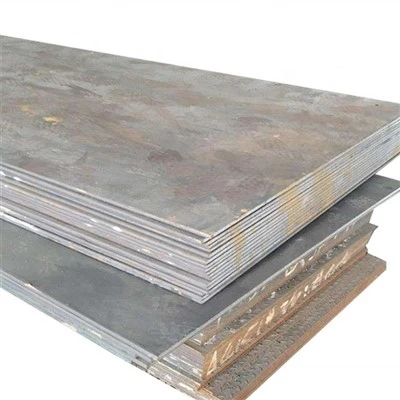
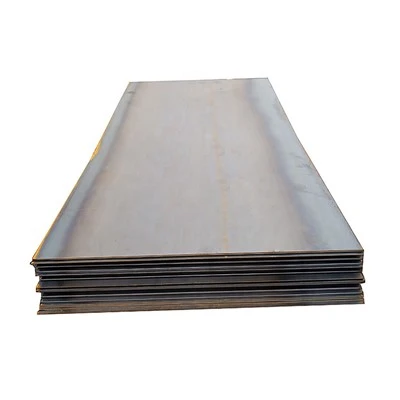
1045 carbon steel plate is a medium-carbon steel that hits a great balance between strength, machinability, and how well it responds to heat treatment. Because it has a higher carbon content (around 0.45%) than low-carbon steels like Q235 or A36, it offers much better hardness and wear resistance once treated.
Most buyers don't choose 1045 for structural welding. Instead, it's the go-to material for machined parts, wear-resistant components, shafts, gears, and heavy-duty base plates-basically, any application where strength and surface hardness matter more than weldability.
In the workshop, 1045 is a favorite because it's so versatile. We can supply it hot rolled, normalized, annealed, or quenched and tempered, depending on exactly what you need it to do. For anyone manufacturing mechanical parts, picking the right delivery condition is just as critical as picking the right steel grade.
Product Details


Specifications and Technical Details
Basic Product Information
| Item | Details |
|---|---|
| Grade | AISI 1045 / SAE 1045 / C45 / S45C |
| Standard | ASTM A830 / ASTM A29 / EN 10083 |
| Product Type | Medium Carbon Steel Plate |
| Thickness Range | 3 mm – 300 mm |
| Width | 1000 mm – 2500 mm |
| Length | 2000 mm – 12000 mm |
| Delivery Condition | Hot Rolled / Annealed / Normalized / Q&T |
| Surface Finish | Black Surface / Machined / Ground |
Mechanical Properties (Typical, Normalized Condition)
| Property | Value |
|---|---|
| Tensile Strength | 570 – 700 MPa |
| Yield Strength | ≥ 310 MPa |
| Elongation | ≥ 16% |
| Hardness | Around 170–230 HB |
Chemical Composition (Typical %)
| Element | Carbon (C) | Manganese (Mn) | Silicon (Si) | Phosphorus (P) | Sulfur (S) |
| Content | 0.43 – 0.50 | 0.60 – 0.90 | 0.15 – 0.35 | ≤ 0.040 | ≤ 0.050 |
Why Choose Our 1045 Carbon Steel Plate?

Anyone who's run a workshop knows that uneven hardness or internal stress just leads to unnecessary machining issues. This is exactly why so many buyers ask about delivery conditions before committing-especially for precision work.
Depending on how you plan to use the steel, we can provide it hot rolled, normalized, annealed, or tailored to your needs. For those making shafts, wear parts, or machined components, let's nail down the right material condition before production starts. It's the best way to save yourself from extra rework later.
Plus, for project orders, we're happy to arrange mixed sizes, custom cuts, and specific machining allowances.
Key Features and Practical Advantages
Choosing the Right Delivery Condition Matters
For most buyers, the first question isn't just about the size of the 1045 carbon steel plate-it's whether the material condition actually matches the final machining process.
When it comes to parts that require heavy CNC machining, many workshops prefer annealed 1045 plate. It's simply easier on cutting tools, which helps keep machining costs down. On the other hand, if you need higher strength for mechanical components, a normalized or quenched and tempered condition is usually the way to go.
In practice, picking the wrong delivery condition can lead to unnecessary rework or extra heat treatment costs down the line.
Flame Cutting and Internal Stress Can Affect Flatness
When it comes to thick 1045 carbon steel plate, flame cutting can sometimes introduce internal stress or cause slight deformation.
That's why many machining workshops prefer normalized material, or they'll specifically request a stress-relieving treatment for larger sizes-especially when the finished part requires tight tolerances.
This is exactly why we always discuss the material condition before you place an order, rather than just focusing on the chemistry or the price tag.
Extra Machining Allowance is Often Considered
Unlike ordinary structural steel, 1045 steel plate is frequently used for machined parts rather than direct fabrication.
For thicker plates or precision parts, many customers reserve extra thickness for milling or surface finishing after cutting. This is especially common for:
- Machine bases
- Shaft supports
- Wear blocks
- Industrial fixtures
For export projects, buyers often confirm machining allowance before production to avoid dimensional issues after processing.
Application

Machine parts

Equipment foundations

Industrial tooling
Our Company Strengths
For buyers who purchase 1045 carbon steel plates, 1045 is often used for shafts, worn parts, machine bases and precision parts, so we pay more attention to the material condition before shipment. According to the final application, we can discuss whether annealing, normalizing or pretreatment materials are more suitable, rather than simply providing standard hot rolled steel plates.
For customers who buy thicker plates, they can also arrange supply according to size and processing allowance to reduce unnecessary workshop processing. This is especially useful for parts that need milling, surface finishing or further processing.

Packaging


FAQ
Q: Which condition is better for machining, annealed or normalized?
A: Annealed material is usually easier to machine, while normalized 1045 offers better strength and dimensional stability.
Q: Can 1045 plate be heat treated?
A: Yes. It responds well to quenching, tempering, and induction hardening.
Q: Do you provide cut-to-size plates?
A: Yes, customized cutting and mixed-size supply can be arranged.
Q: Can you provide MTC documents?
A: Yes, Mill Test Certificates (MTC) can be supplied with shipment.
Q: What payment methods do you support?
A: We generally accept T/T and L/C. Standard payment terms are 30% deposit and 70% balance before shipment.

Hot Tags: 1045 carbon steel plate, China 1045 carbon steel plate manufacturers, factory, Q345 Carbon Steel Plate, Q195 Carbon Steel Plate, Q195 steel plate, 1050 Carbon Steel Plate, 1045 Carbon Steel Sheet, Q195 Carbon Steel Sheet