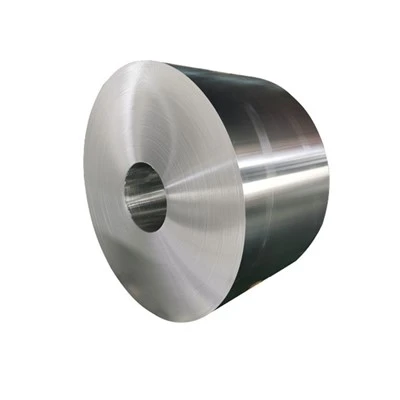
Duplex steel coils are highly valued in various industries due to their excellent combination of strength and corrosion resistance. As a trusted duplex steel coil supplier, we understand the importance of the heat treatment process in optimizing the properties of these coils. In this blog post, we will explore the heat treatment process for duplex steel coils, including its purpose, types, and key considerations.
Purpose of Heat Treatment for Duplex Steel Coils
The primary purpose of heat treatment in duplex steel coils is to achieve a desirable microstructure, which in turn enhances their mechanical and corrosion - resistant properties. Duplex steel has a dual - phase microstructure consisting of ferrite and austenite. The balance between these two phases is crucial for the performance of the steel. Heat treatment helps in adjusting this phase balance, eliminating undesirable phases such as sigma phase, and improving the overall homogeneity of the material.
Proper heat treatment can increase the strength, toughness, and ductility of the duplex steel coil. It also enhances the resistance to localized corrosion, such as pitting and crevice corrosion, which are common challenges in many industrial environments.
Types of Heat Treatment Processes for Duplex Steel Coils
Solution Annealing
Solution annealing is the most common heat treatment process for duplex steel coils. This process involves heating the steel to a high temperature, typically in the range of 1020 - 1100°C (1870 - 2010°F), and then rapidly cooling it, usually by quenching in water or air.
During solution annealing, the alloying elements in the duplex steel dissolve into the ferrite and austenite phases, creating a homogeneous solid solution. When the steel is cooled rapidly, the high - temperature microstructure is "frozen," maintaining the desired phase balance. This process is essential for removing any precipitates that may have formed during hot rolling or other manufacturing processes and restores the corrosion resistance of the steel.
For example, when we supply S32550 Duplex Stainless Steel Coil, solution annealing is a critical step to ensure its excellent combination of strength and corrosion resistance in applications such as chemical processing.
Stress Relieving
Stress relieving is another important heat treatment process for duplex steel coils. It is often carried out after cold working or welding processes, which can introduce internal stresses in the steel. These stresses can lead to deformation, cracking, or reduced corrosion resistance over time.
Stress relieving involves heating the steel to a relatively low temperature, typically between 550 - 650°C (1020 - 1200°F), and holding it at this temperature for a specific period, followed by slow cooling. This process helps to reduce the internal stresses without significantly altering the microstructure of the steel.
For our S32750 Super Duplex Stainless Steel Coil, which is commonly used in high - stress applications such as offshore oil and gas platforms, stress relieving is crucial to ensure long - term reliability and performance.


Key Considerations in the Heat Treatment of Duplex Steel Coils
Temperature Control
Precise temperature control is of utmost importance in the heat treatment of duplex steel coils. Even small deviations from the recommended temperature range can have a significant impact on the phase balance and properties of the steel. For instance, if the temperature during solution annealing is too low, the alloying elements may not dissolve completely, resulting in a non - uniform microstructure and reduced corrosion resistance. On the other hand, if the temperature is too high, the formation of undesirable phases such as sigma phase may occur, which can embrittle the steel and reduce its toughness.
Cooling Rate
The cooling rate after heating is also a critical factor. As mentioned earlier, rapid cooling is required during solution annealing to maintain the desired phase balance. However, if the cooling rate is too fast, it can introduce additional internal stresses in the steel. Therefore, a proper cooling rate needs to be carefully selected based on the thickness and composition of the duplex steel coil.
Time at Temperature
The time that the duplex steel coil is held at the heat treatment temperature is another key consideration. Sufficient time is needed to allow the alloying elements to dissolve or the internal stresses to be relieved. However, excessive time at temperature can also lead to the formation of unwanted phases or grain growth, which can degrade the properties of the steel.
Heat Treatment and Different Grades of Duplex Steel Coils
S31803 Duplex Stainless Steel Coil
S31803 is a widely used duplex stainless steel grade. For this grade, solution annealing is typically carried out at a temperature of around 1050 - 1070°C (1920 - 1960°F). This temperature range ensures the proper dissolution of alloying elements and the formation of the desired ferrite - austenite phase balance. After solution annealing, rapid cooling is necessary to prevent the formation of sigma phase and maintain the corrosion - resistant properties of the coil.
2205 Duplex Stainless Steel Coil
2205 duplex steel is known for its good combination of strength and corrosion resistance. The heat treatment process for 2205 is similar to that of S31803. Solution annealing is usually performed at a temperature between 1020 - 1100°C (1870 - 2010°F). Stress relieving can be carried out at a temperature of 550 - 650°C (1020 - 1200°F) to reduce internal stresses introduced during fabrication processes.
2507 Duplex Stainless Steel Coil
2507 is a super duplex stainless steel with high strength and excellent corrosion resistance, especially in aggressive environments such as seawater. The solution annealing temperature for 2507 is typically in the range of 1050 - 1120°C (1920 - 2050°F). Due to its high alloy content, precise temperature and cooling rate control are even more critical during heat treatment to ensure the optimal phase balance and performance of the coil.
Importance of Quality Heat Treatment in Our Supply Chain
As a duplex steel coil supplier, we recognize that the quality of heat treatment directly affects the performance and reliability of our products. We work closely with our manufacturing partners who have state - of - the - art heat treatment facilities and experienced technicians. These facilities are equipped with advanced temperature control systems and cooling equipment to ensure that every duplex steel coil we supply meets the highest quality standards.
We also conduct rigorous quality inspections on all heat - treated coils. This includes non - destructive testing methods such as ultrasonic testing to detect any internal defects, and chemical analysis to verify the composition and phase balance. Our commitment to quality heat treatment allows us to provide our customers with duplex steel coils that are reliable, durable, and suitable for a wide range of applications.
Conclusion
The heat treatment process for duplex steel coils is a complex and critical step in their manufacturing. By using appropriate heat treatment techniques such as solution annealing and stress relieving, and carefully controlling factors like temperature, cooling rate, and time at temperature, we can optimize the microstructure and properties of the duplex steel. Different grades of duplex steel coils, such as S32550 Duplex Stainless Steel Coil, S32750 Super Duplex Stainless Steel Coil, S31803 Duplex Stainless Steel Coil, 2205 Duplex Stainless Steel Coil, and 2507 Duplex Stainless Steel Coil, each have specific heat treatment requirements to achieve their best performance.
If you are in the market for high - quality duplex steel coils and want to learn more about our products and the heat treatment processes we use, we invite you to contact us for a detailed discussion and potential procurement. We are ready to provide you with the best solutions tailored to your specific needs.
References
- ASM Handbook Volume 4: Heat Treating.
- Duplex Stainless Steels: Properties, Processing, and Applications by R. K. Ray.
- Stainless Steel Heat Treatment Guide by The Nickel Institute.