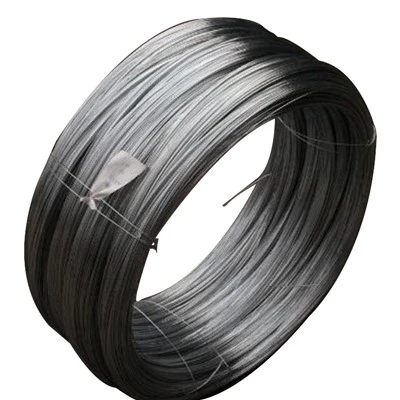
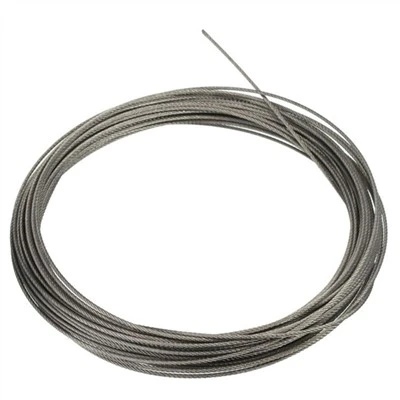
As a seasoned spring steel wire supplier, I understand the critical importance of ensuring the quality of our products. Spring steel wire is used in a wide range of applications, from automotive components to industrial machinery and consumer goods. The performance and reliability of these applications heavily depend on the quality of the spring steel wire. In this blog post, I will share some key methods and considerations for testing the quality of spring steel wire.
Chemical Composition Analysis
One of the fundamental aspects of ensuring the quality of spring steel wire is to analyze its chemical composition. The chemical composition directly affects the mechanical properties and performance of the steel wire. For example, elements such as carbon, manganese, silicon, chromium, and vanadium play crucial roles in determining the hardness, strength, and ductility of the wire.
To perform a chemical composition analysis, several methods can be employed. One common approach is spectroscopy, which includes atomic absorption spectroscopy (AAS) and optical emission spectroscopy (OES). These techniques can accurately measure the concentration of various elements in the steel wire. By comparing the measured results with the specified standards, we can determine whether the chemical composition of the spring steel wire meets the requirements.


For instance, our company offers different types of spring steel wires, including 302 Stainless Steel Spring Wire, 60Si2MnA Spring Steel Wire, 50CrVA Spring Steel Wire, 1074 Spring Steel Wire, and 65Mn Spring Steel Wire. Each type has its specific chemical composition requirements, and we conduct thorough chemical analysis for every batch of products to ensure consistency and quality.
Mechanical Property Testing
Mechanical properties are another crucial factor in evaluating the quality of spring steel wire. The most common mechanical properties tested include tensile strength, yield strength, elongation, and hardness.
Tensile Testing
Tensile testing is a standard method for determining the strength and ductility of spring steel wire. During a tensile test, a sample of the steel wire is gradually pulled until it breaks. The test measures the maximum load the wire can withstand (tensile strength) and the amount of elongation before fracture.
Tensile strength is an important parameter as it indicates the maximum stress the wire can support without breaking. Yield strength, on the other hand, represents the stress at which the wire begins to deform plastically. Elongation is a measure of the wire's ability to stretch before breaking, which is related to its ductility.
For high - quality spring steel wire, it should have appropriate tensile and yield strengths to ensure it can withstand the forces applied in its intended application. At the same time, sufficient elongation is required to prevent brittle failure.
Hardness Testing
Hardness testing is also essential for assessing the quality of spring steel wire. Hardness is a measure of the material's resistance to indentation or scratching. There are several hardness testing methods, such as the Rockwell hardness test, Brinell hardness test, and Vickers hardness test.
The Rockwell hardness test is widely used due to its simplicity and speed. It measures the depth of indentation made by a specified indenter under a certain load. The hardness of spring steel wire affects its wear resistance, formability, and the ability to maintain its shape under stress.
Fatigue Testing
In many applications, spring steel wire is subjected to repeated loading, which can lead to fatigue failure. Fatigue testing is used to evaluate the ability of the wire to withstand cyclic loading.
During a fatigue test, a sample of the spring steel wire is subjected to a repeated load with a specific amplitude and frequency until it fails. The number of cycles the wire can endure before failure is recorded. This information is crucial for applications where the wire is exposed to cyclic stresses, such as in automotive suspension springs.
Surface Quality Inspection
The surface quality of spring steel wire can have a significant impact on its performance and service life. Surface defects such as cracks, scratches, and inclusions can act as stress concentrators, leading to premature failure of the wire.
Visual inspection is the most basic method for checking the surface quality of spring steel wire. Trained inspectors carefully examine the wire under proper lighting conditions to detect any obvious surface defects. In addition, non - destructive testing (NDT) methods can be used for more in - depth inspection.
Magnetic Particle Inspection (MPI)
MPI is a widely used NDT method for ferromagnetic materials like spring steel wire. It involves applying a magnetic field to the wire and then spreading ferromagnetic particles on its surface. If there are surface or near - surface defects, the magnetic field will be disrupted, causing the particles to accumulate at the defect locations, making them visible.
Eddy Current Testing (ECT)
ECT is another NDT technique that can be used to detect surface and near - surface defects in spring steel wire. It works based on the principle of electromagnetic induction. When an alternating current is passed through a coil near the wire, eddy currents are induced in the wire. Any defects in the wire will cause changes in the eddy current pattern, which can be detected by the testing equipment.
Dimensional Accuracy Measurement
The dimensional accuracy of spring steel wire is also an important aspect of quality control. The diameter, length, and straightness of the wire need to be within the specified tolerances.
Diameter measurement is typically done using precision measuring instruments such as micrometers or calipers. For large - scale production, automated diameter measurement systems can be used to ensure consistent and accurate results.
Length measurement is important, especially for applications where the wire needs to be cut to specific lengths. Straightness is crucial for the proper functioning of springs, as a bent wire can affect the performance and shape of the spring.
Conclusion
Testing the quality of spring steel wire is a comprehensive process that involves multiple aspects, including chemical composition analysis, mechanical property testing, surface quality inspection, and dimensional accuracy measurement. By implementing strict quality control measures and using advanced testing techniques, we can ensure that our spring steel wire products meet the highest standards of quality and performance.
If you are in the market for high - quality spring steel wire, whether it is 302 Stainless Steel Spring Wire, 60Si2MnA Spring Steel Wire, 50CrVA Spring Steel Wire, 1074 Spring Steel Wire, or 65Mn Spring Steel Wire, please feel free to contact us for more information and to discuss your specific requirements. We are committed to providing you with the best products and services.
References
- ASTM International. (20XX). Standard test methods for steel wire.
- ASME. (20XX). Boiler and pressure vessel code related to spring steel wire applications.
- ISO. (20XX). International standards for the testing of metallic materials including spring steel wire.