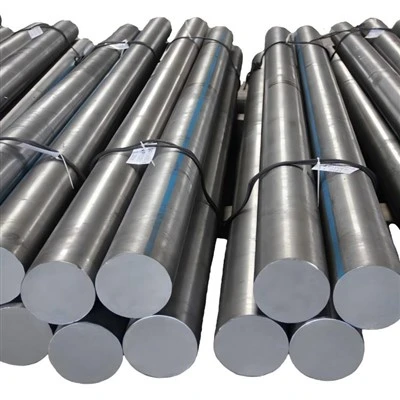
Spring steel bar remains a go-to material for industrial, automotive, and construction applications thanks to its high tensile strength and elastic rebound. But a seasoned supplier is cautioning buyers that the material comes with real trade-offs that can lead to costly failures if overlooked.

Processing sensitivity tops the list
Alloy grades such as 55SiMnVB and 5160 must be precisely heat-treated-typically heated to 800–900°C, quenched, then tempered-to reach optimal hardness and elasticity. Minor deviations can leave parts brittle or unable to rebound. One client returned a truckload of 1095 parts after an oven calibrated 50°C too low cracked half of them in a single drop.
Corrosion resistance is another weak point.
With carbon content ranging from 0.5% in 5160 up to 0.95% in 1095, spring steel rusts more readily than low-carbon steels, and alloying elements like silicon and manganese can accelerate corrosion if unprotected. A coastal construction client saw 20% of uncoated formwork clips fail within six months due to salt air. Galvanizing, powder coating, or polishing adds cost and processing time.
Fatigue failure is the most insidious risk
Cyclic loading-from car suspensions to conveyor clips-creates micro-cracks that grow unnoticed until catastrophic failure. A heavy-duty agricultural harvester broke a spring steel bar on a harvest line, shutting down production for 12 hours. Even premium high-cycle grades have a finite life, and failure timing cannot be predicted precisely.
Weight and machinability also matter
At roughly 7.85 g/cm³, spring steel is heavier than aluminum or carbon-fiber alternatives; one EV client switched to aluminum suspension springs and gained 2% more range per charge. High-carbon and high-alloy grades are also harder to machine, with one client reporting 1095 took twice as long as mild steel and required tool changes every 50 parts instead of every 200.
Temperature sensitivity rounds out the list
High-carbon grades can become brittle below roughly -40°C-suspension springs shattered at -50°C in a northern Canada test-while above 200°C tempering breaks down, reducing hardness and elasticity.
The supplier stresses that spring steel remains the most cost-effective choice for many applications, but matching grade to use case is essential. Coated grades or stainless alternatives suit corrosive environments; processing guidelines help minimize brittleness in high-cycle fatigue applications; and adjusted tempering specifications improve stability in extreme temperatures. Buyers are advised to weigh processing costs, maintenance, expected lifespan, and operating environment-not just upfront price-before specifying.
For applications ranging from heavy-duty 5160 automotive springs to fatigue-resistant 55SiMnVB industrial components and high-carbon 1095 tools, the supplier offers grade selection guidance and application support.