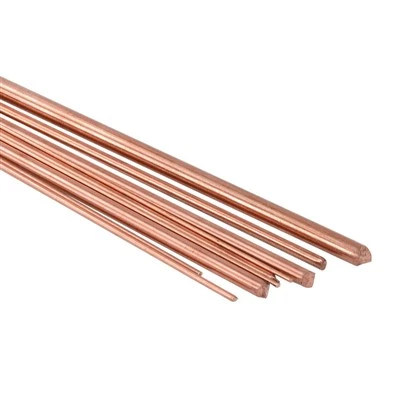
When Do Buyers Actually Choose C11000 Copper Bar?
In many industrial projects, buyers do not automatically choose the cheapest copper material. The decision often depends on one question:
Does conductivity performance matter more than fabrication flexibility?
If the answer is yes, C11000 Copper Bar is usually one of the first materials considered.
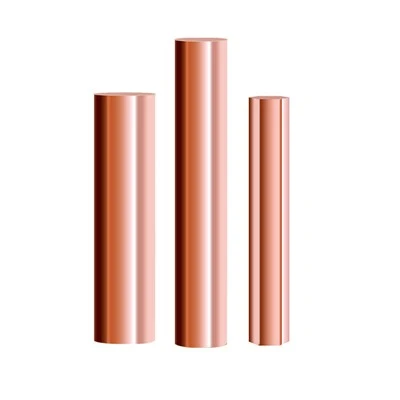
Known as Electrolytic Tough Pitch (ETP) Copper, C11000 contains 99.90% minimum copper content and is widely selected for electrical systems where current transfer efficiency cannot be compromised.
For example, manufacturers producing busbars, transformer components, switchgear connectors, grounding systems, and conductive machined parts often prefer C11000 because even small conductivity differences may affect long-term operating performance.
Compared with phosphorus-deoxidized grades like C12000, C11000 is less about welding convenience and more about maintaining stable electrical performance.
Product Details


Who Actually Buys C11000
Most buyers of C11000 copper bar are not general metal shops. They are:
- Busbar manufacturers
- Switchgear and panel builders
- Transformer component suppliers
- Grounding system fabricators
- Power distribution equipment makers
These customers rarely weld or braze C11000. They bolt, crimp, clamp, or machine it.
Specifications and Technical Details
Basic Product Information
| Item | Details |
|---|---|
| Material Grade | C11000 Copper |
| Material Type | Electrolytic Tough Pitch Copper (ETP Copper) |
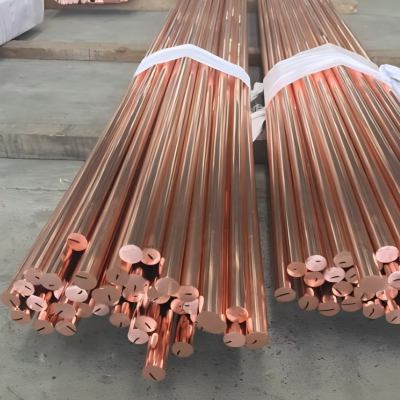
| Diameter Range | 5 mm – 600 mm |
| Temper | Soft Annealed (O)/Half Hard (H02)/Hard (H04) |
| Length | 500mm – 5000mm |
| Surface Finish |
Bright / Mill Finish / Machined Surface |
| Lead Time | In-stock goods: 3–7 working daysCustom processed orders: 10–20 working days |
| Packaging | Standard export packing: Bundled with steel straps + plastic wrapping; Large pieces with wooden crates/pallets. Fully protected against scratch, oxidation and moisture for long-distance sea/land transportation. |
Mechanical Properties (Typical Values)
| Property | Value |
| Tensile Strength |
Soft Annealed (O):200 – 250Mpa Half Hard (H02):255 – 315Mpa Hard (H04):295 – 360Mpa |
| Yield Strength(0.2% Offset) |
Soft Annealed (O):30 – 50Mpa Half Hard (H02):170 – 280Mpa Hard (H04):240 – 330Mpa |
| Elongation |
Soft Annealed (O):45% – 55% Half Hard (H02):≥ 15% Hard (H04):5% – 10% |
| Hardness (HB) |
Soft Annealed (O):35 – 45 Half Hard (H02):65 – 85 Hard (H04):80 – 100 |
Chemical Composition (Typical %)
| Element | Content |
| Copper (Cu + Ag) | ≥ 99.90 |
| Oxygen (O) | Approx. 0.02 – 0.04 |
Key Features and Practical Considerations
Conductivity Usually Matters More Than Strength
For buyers purchasing C11000 Copper Bar, mechanical strength is often not the first concern.
In electrical applications, conductivity loss is usually a bigger issue than hardness. Materials with lower conductivity may generate more resistance, which can affect efficiency or increase heat generation during operation.
Because C11000 copper bar typically provides 100% IACS conductivity, it is commonly selected for components where current transfer efficiency matters, such as:
- Busbars
- Electrical terminals
- Grounding conductors
- Switchgear components
In these situations, conductivity stability is often more important than higher mechanical strength.
Pure Copper Machines Differently From Steel
Some customers using C11000 copper bar for CNC machining notice that copper behaves differently compared with carbon steel or brass.
Because copper is softer, improper machining parameters may lead to:
- Material sticking to cutting tools
- Surface scratching
- Burr formation
For machined conductive components, buyers often discuss temper condition beforehand to improve processing efficiency.
Heat Dissipation is Another Reason Buyers Choose C11000
In some industrial applications, customers select C11000 Copper Bar not only for conductivity but also for heat transfer.
Because copper transfers heat efficiently, it is often used for:
- Heat-conductive components
- Electrical cooling systems
- Transformer parts
- Thermal conductive assemblies
In these situations, thermal performance may be just as important as electrical conductivity.
Applications

C11000 Copper Bar is commonly used for:
- Electrical busbars (flat bar, rectangular)
- Switchboard components
- Transformer terminals and connectors
- Grounding conductors
- Power distribution blocks
- High-current electrical hardware
Compared with other copper grades, C11000 Copper Bar is generally chosen where conductivity performance takes priority.
Our Strengths
We supply copper alloys, stainless steel, nickel alloys, carbon steel, and engineering materials to industrial customers and export markets.
For C11000 Copper Bar, we understand that many customers care more about conductivity consistency, dimensional accuracy, and delivery reliability than simply comparing price per kilogram.
We support:
- Custom cutting lengths
- Mixed size orders
- Busbar and flat bar requirements
- Export packaging solutions
- Material traceability and MTC documentation
For overseas customers, we also coordinate packaging and shipment arrangements to reduce damage risk during transport and help materials move directly into production after arrival.
FAQ
Q: Is C11000 suitable for busbar applications?
A: Yes. Because of its high conductivity, C11000 is widely used in busbars and electrical distribution systems.
Q: Can you provide custom sizes and cutting?
A: Yes. Customized diameters, flat bar dimensions, and cut lengths can be arranged.
Q: What temper conditions are available?
A: Soft annealed, half hard, and hard temper are available depending on processing needs.
Q: What payment methods do you support?
A: We generally accept T/T and L/C. Standard payment terms are 30% deposit and 70% balance before shipment.

Hot Tags: c11000 copper bar, China c11000 copper bar manufacturers, factory, copper bar or rod, C10200 Copper Bar, C11000 Bar, C10200 Bar, C12000 Copper Bar, C10200 Copper Rod