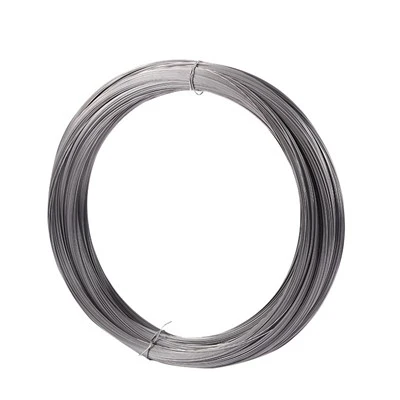
Hey everyone, it's Alex from the stainless steel strip team here-today we're answering a question I get literally every single week: Are all stainless steel strips non-magnetic? Let's cut through the confusion, because this is way trickier than it sounds, and it's super important for anyone sourcing stainless steel strips (like, if you're buying for kitchen appliances, automotive parts, or construction, this detail can make or break your project).
First off, let's recap what makes stainless steel stainless-cr, right? Chromium is the key element that creates that thin, invisible oxide layer on the surface that stops rust. But magnetism? That's all about crystal structure, specifically something called austenite vs. ferrite phases. Here's the quick breakdown I tell customers over coffee (yes, I've actually done that): ferritic and martensitic stainless steels are magnetic, austenitic are usually not- but wait, there are so many exceptions it's not even funny.
Let's start with the most common confusion: 304 and 316 stainless steel strips. These are the workhorses for food equipment, medical tools, marine parts-pretty much everything that needs corrosion resistance. Most people think they're totally non-magnetic… but not 100% of the time. If you work these strips super hard, like bending or stamping them a lot, you can introduce martensite in the structure, and suddenly they'll pull on a fridge magnet. It's not a defect, it's just a structural change from processing-something we see all the time at our facility when we're custom-cutting strips for a tight client order.
Now, let's talk about the magnetic ones, because that's where the real myths get busted. Take 430 stainless steel strip-this is our go-to for things like trim parts, exhaust components, and appliances that don't need the super high corrosion resistance of 304. 430 is a ferritic stainless steel, full stop-its crystal structure is ferritic, so it's magnetic straight from the mill. No ifs, ands, or buts. We have a whole page for it if you want the specs, check out [430 Stainless Steel Strip]. Customers often come to us thinking 430 is "less good" because it's magnetic, but that's just not true-it's perfect for its intended uses, and the magnetism is a feature, not a flaw, for things like holding it in place during assembly.
Then there's martensitic stainless steel, like 410 stainless steel strip. This stuff is hard, strong, magnetic, and used for things like knife blades, industrial valves, and fasteners. Again, magnetic through and through. We love 410 for projects where you need strength plus corrosion resistance that's better than regular steel, and if you need to confirm the magnetic pull, just ask our sales team-we even do quick on-site checks for local clients. You can see more details here: [410 Stainless Steel Strip].
Wait, here's a curveball: some stainless steels that are usually non-magnetic can become magnetic after welding. I learned this the hard way early in my career-we had a client who ordered 316 strips for a marine bracket, and after their welder finished, the bracket was magnetic. They thought they got the wrong material, but it was just the heat from the welding altering the austenitic structure a tiny bit, turning some of it into martensite. It's a common issue, and the fix is either choosing a different alloy or accounting for that shift in your design.
What about the higher-alloy stuff, like 309 and 347 stainless steel strip? These are for extreme environments-high heat, heavy corrosion, things like furnace parts, exhaust manifolds, and chemical processing equipment. 309 is a heat-resistant austenitic alloy, so it's mostly non-magnetic, but again, processing can change that. 347 has niobium added to stop corrosion in welds, and it's also generally non-magnetic. We've got pages for both, if you need to deep dive: [309 Stainless Steel Strip] and [347 Stainless Steel Strip]. The thing with these is their alloy content is designed to keep the austenitic structure stable, so the magnetism shift from processing is way less likely than with 304 or 316, but it's still not impossible for super heavy fabrication.
Let's get back to the core question: Are all stainless steel strips non-magnetic? The short answer is HELL no. Only the austenitic grades (304, 316, 309, 347) are usually non-magnetic, and even they can be magnetic if they're cold worked or welded hard. The ferritic (430) and martensitic (410, 420) grades are magnetic 100% of the time-no exceptions. I've seen customers panic because their "stainless steel" part stuck to a magnet, thinking they got cheap junk, but it's just the grade. For example, a lot of budget appliance trim uses 430, and that's intentional because it's cost-effective and works great for that use.
Another thing people mix up: "non-magnetic" vs. "magnetically responsive". Some austenitic strips are only weakly magnetic, not like a regular steel nail, but still enough to register on a strong magnet. If you're using a part where magnetism matters-like if you're building a device that needs to avoid magnetic interference, or you're using magnetic assembly hardware-you need to nail down the exact grade, not just assume "stainless = non-magnetic".
At our company, we deal with this every single day. We get calls from clients who thought their 304 strip would stay non-magnetic after being bent into a custom shape, and we walk them through the reality of cold working. We also have clients who specifically ask for magnetic stainless strips because they need parts that can be held in place during manufacturing, and we steer them straight to 430 or 410. We always share our material test reports so there's zero confusion-no surprise magnetism when you get your order.
Now, let's talk about when magnetism actually matters. If you're making kitchen sinks, coffee makers, or food processing equipment, 304 or 316 (mostly non-magnetic) is standard, and any slight magnetism from fabrication is totally fine. But if you're making things like MRI-compatible medical tools, electronic components, or parts for a precision instrument, you need strictly non-magnetic stainless steel strips, and you have to avoid grades that are prone to turning magnetic when processed. That's where 309 and 347 shine because their stable austenitic structure holds up better under heat and stress.
I want to make one thing clear: magnetism has nothing to do with the corrosion resistance of stainless steel. That's the biggest myth out there. A magnetic stainless strip can be just as corrosion-resistant as a non-magnetic one-they're just different grades with different crystal structures, not different levels of "stainlessness". 430 is magnetic but great for interior trim; 304 is non-magnetic and great for food contact; 316 is non-magnetic and great for marine-all are stainless, all are useful, all have their place, regardless of magnetism.
So what should you do if you're sourcing stainless steel strips and you care about magnetism? First, figure out what grade you actually need based on your application, not just whether it's magnetic. If magnetism is a hard no, ask your supplier for austenitic grades, confirm they're using the correct composition to keep the austenitic structure stable, and ask if they can do a post-processing stress relief to reduce any cold-work induced magnetism. If you want magnetic stainless, go with 430 or 410-we have ready stock of both, and we can cut them to your exact specs fast.


At the end of the day, this isn't rocket science, but it's a detail that trips up so many people. The worst part is when someone buys the wrong stainless strip for their project because they thought "all are non-magnetic"-that leads to delays, extra costs, and wasted materials. We try to prevent that by being upfront about each grade's properties, including magnetism, and making sure our customers get exactly what they need.
If you're working on a project and you're not sure which stainless steel strip is right for you, whether you need something non-magnetic for precision parts or magnetic for assembly, hit us up-our team knows this stuff inside and out, and we can help you pick the perfect grade without all the confusion. No pressure, just straight talk.
References:
- ASM International. (2019). Stainless Steel: Alloy Grades and Properties. Materials Park, OH: ASM International.
- The World Steel Association. (2021). Stainless Steel Basics: Structure, Corrosion Resistance, and Applications. Brussels, Belgium: World Steel Association.
- National Institute of Standards and Technology (NIST). (2020). Magnetic Properties of Austenitic and Ferritic Stainless Steels. Gaithersburg, MD: U.S. Department of Commerce.